We Offer Customised Solutions For Your City
Please select your city to proceed
 Ahmedabad
 Gandhinagar
 Gurgaon
 New Delhi
 Noida
Noida
Please select your city to proceed
Ahmedabad
Gandhinagar
Gurgaon
New Delhi
Noida
Apply the 1MONTHFREE coupon code at checkout and get 1 Month Free. 🎉
Access your account to manage orders, update your information, and stay in control of your purchases.
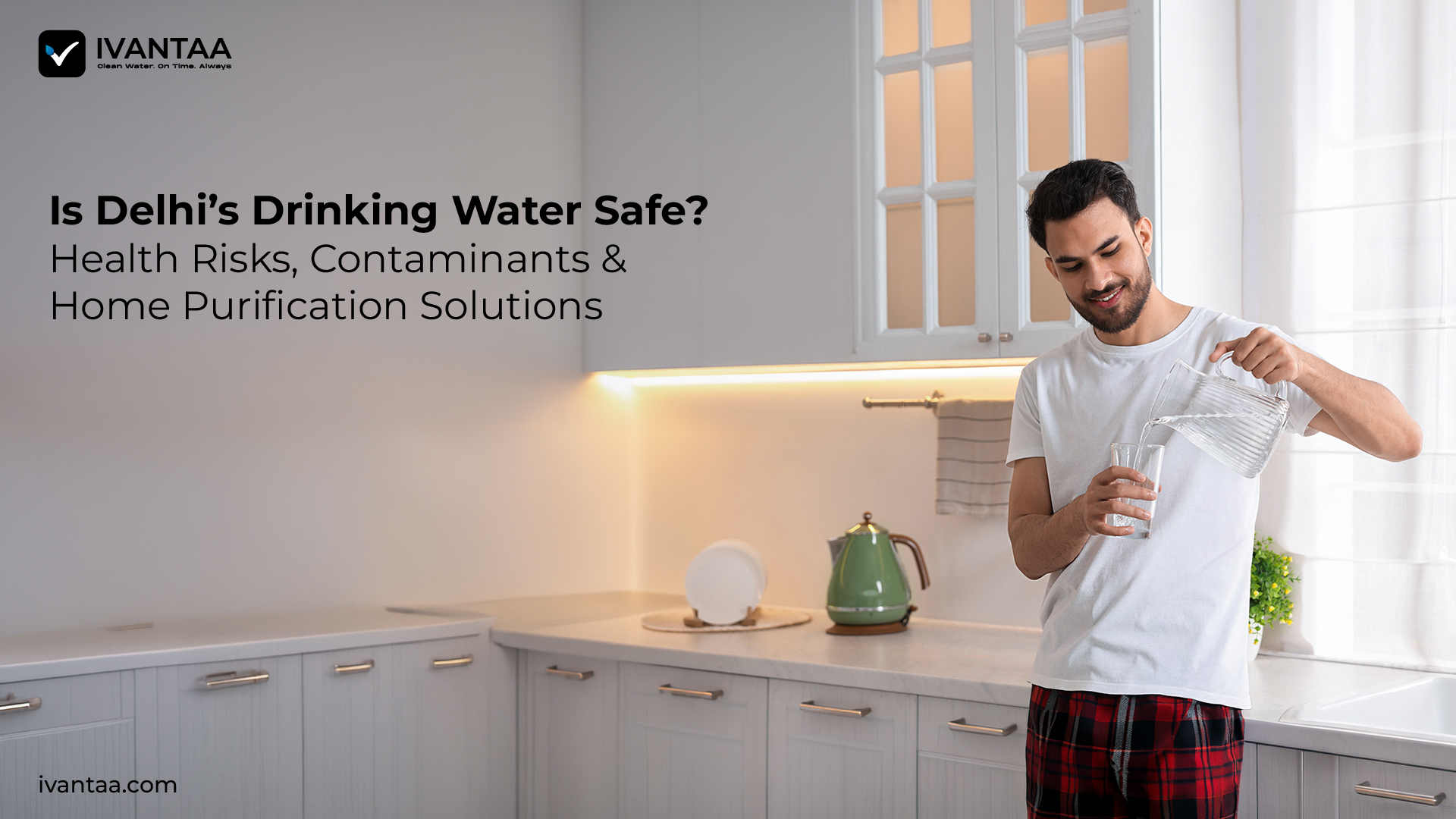
You’re making a wise decision if you’re looking for an RO water purifier to rent in Delhi. Clean and purified drinking water is a necessity, not a luxury, in today’s world. Delhi water quality concerns have led many residents to question that assumption. Queries like “Is Delhi tap water safe?” are becoming more frequent due to factors like growing population density, deteriorating pipes, contaminated water sources, and uneven infrastructure.
Municipal authorities treat water before distribution. Challenges such as pipeline contamination, water storage issues, and environmental pollution make water purification for the home an important consideration. Choosing the best RO purifier rental will suit your lifestyle and budget.
Delhi is mostly dependent on water from nearby states, the Yamuna River, groundwater sources, and water supplied from neighboring states. Municipal water quality issues affect the supply before it reaches homes, even after treatment in water facilities.
Major Challenges:
These elements have a crucial role in the ongoing water contamination in Delhi.
During distribution, pollutants can still enter even purified water.
Delhi’s drinking water safety is increasingly threatened by harmful contaminants present in the water supply. Such exposure increases contaminated drinking water health risks like weak immunity, toxicity, and digestive problems.
Unsafe water affects health, ecosystems, and the economic productivity of daily life.
Over time, these challenges underscore the importance of water purification in sustaining household health and comfort.
Municipal water treatment plants originated to remove major contaminants. Fortunately, the last-mile delivery system has an issue.
Among the causes are:
Therefore, while treatment facilities play a crucial role, using them entirely might not ensure consistent Delhi drinking water safety at the tap level.
The primary functions of household water purification are the removal of physical impurities, the reduction of chemical contaminants, the elimination of microorganisms, the improvement in taste and odor, the protection against last-mile contamination, and supporting overall health and well-being. In short, it is about ensuring safety, enhancing quality, and protecting health.
Given ongoing Delhi water quality concerns, installing an indoor water purification system provides an advanced level of safety.
Benefits of purifying water at home:
This clearly shows the urgent need for a water purifier at home, especially in cities with vast pipeline networks..
Every purifying system is different. The level of contamination and the source of your water will impact which one is best for you.
Types are:
For complete safety, a lot of modern devices mix RO, UV, and UF.
It is very important to understand specific needs before investing in water purification for the home.
Consider:
An RO-based system is generally suggested if TDS levels are higher than 300 ppm. UV or UF systems may function well for lower TDS water that has microbiological problems. Making a wise decision ensures effective household water purification and continuous security.
Delhi’s problems are not exclusive. Cities all over the world have been affected by rapid urbanization, industrial growth, and infrastructural strain.
Delhi’s issue may act as an example for other urban areas dealing with municipal water quality issues:
Urban populations must understand the importance of water purification as part of preventive healthcare.
The challenge regarding Delhi water quality concerns isn’t only visible pollution but also hidden contamination. So, is Delhi’s tap water safe? It may not always be, which highlights the need for household water purification at home. Investing in a trustworthy water purifier protects your family and offers safe, clean drinking water every day.
Clean water isn’t a luxury; it is a basic requirement, and ensuring its safety begins at home.
Typically, the time required to install a water filter will range from 30 to 45 minutes. If the installation is taking longer than this time, then there is usually an issue with the installation being done correctly.
Yes, installing a water filter by yourself is possible if you are knowledgeable about the basics of plumbing. However, a lack of knowledge may lead to small mistakes being made that result in leaks and preventable loss of time.
If your tap water runs slowly, it is an indication that your water pressure is too low for an RO purifier. It requires a constant flow of water at a sufficient pressure in order to operate correctly.
The best location to install your water purifier in your home is near the kitchen’s water line, drain, and power outlet access; convenience takes precedence over concealment.
After the water purifier has been installed, pre-filters must be replaced every six to twelve months. If the pre-filters are replaced regularly on time, this will extend the longevity of the RO membrane.
Log in or sign up to manage your orders and account details.
By continuing, you agree to our Terms & Conditions and Privacy Policy.