




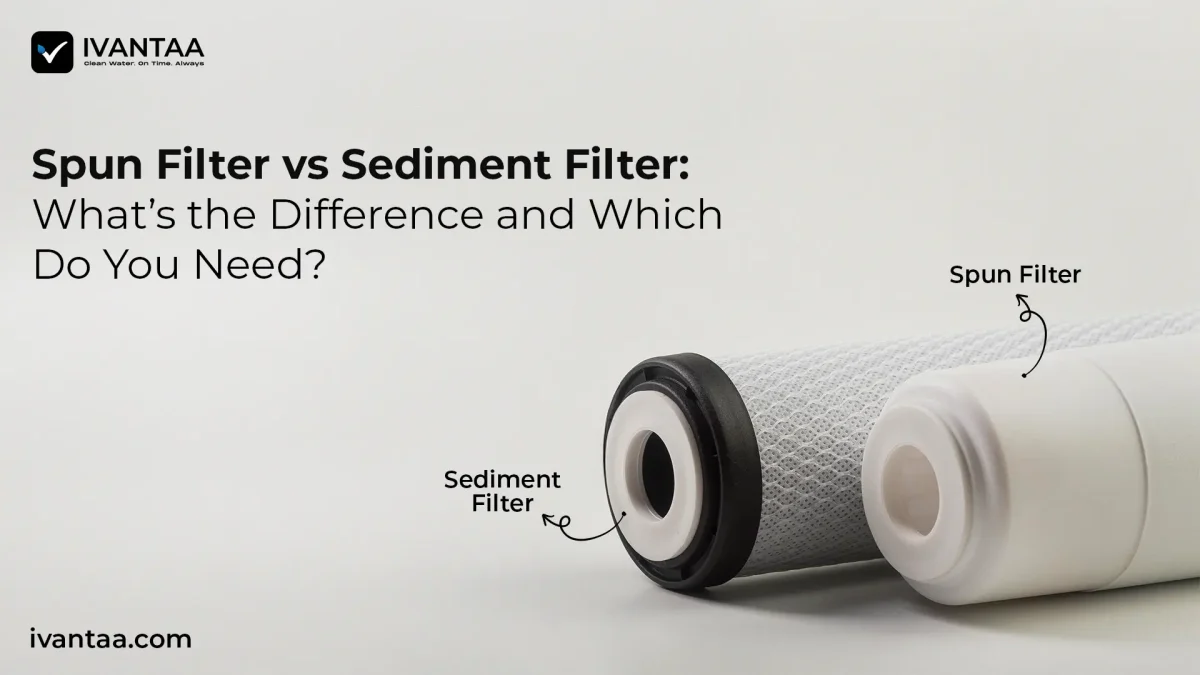
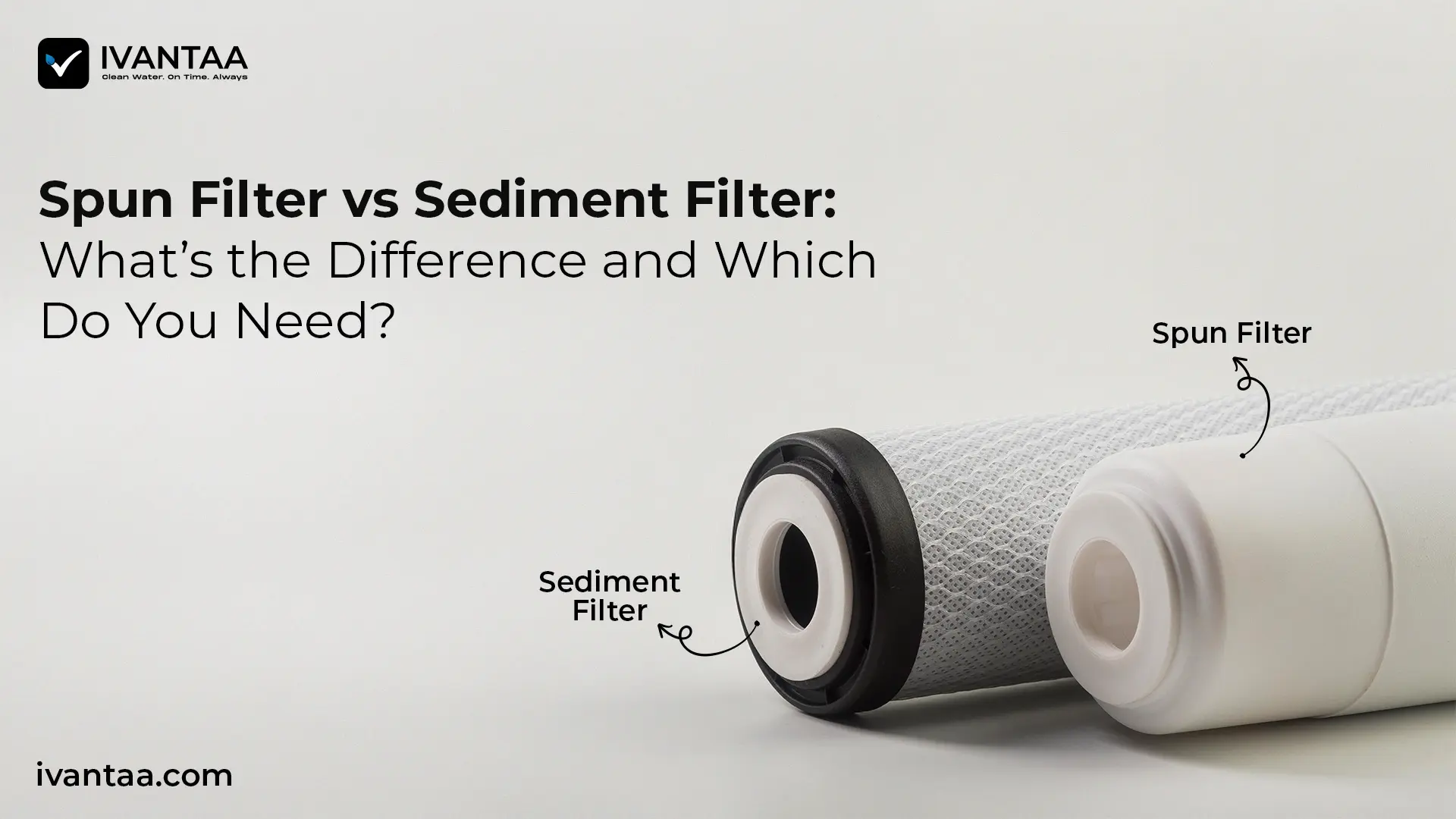
Spun Filter vs Sediment Filter: What’s the Difference and Which Do You Need?

If you’ve ever opened your RO purifier and seen that grimy first filter, you already know…

Spun filter and sediment filter comparison for RO water purifiers

Spun Filter vs Sediment Filter: What’s the Difference and Which Do You Need?

If you’ve ever opened your RO purifier and seen that grimy first filter, you already know how much dirt and debris your water carries before purification even begins. That first line of defence is usually a spun filter or a sediment filter, two terms most people use interchangeably.

But here’s the catch: they aren’t the same. And choosing the wrong one can bring down the performance of your RO system, increase maintenance costs, and even reduce filter life.

Why Pre-Filters Matter in Water Purification

Before water even touches the RO membrane, it passes through pre-filters. These filters remove dust, mud, rust flakes, sand, silt, and floating debris. Without them, the RO membrane would choke faster, your purifier would need more frequent maintenance, and the output water flow would drop drastically.

A study published on ScienceDirect found that suspended particles significantly reduce membrane efficiency and increase operating pressure requirements in RO systems.

That is exactly why the right type of pre-filtration is essential.

Understanding Spun Filters in Simple Terms

A spun filter (also called a melt-blown filter) is made by spinning polypropylene fibres into a thick, layered cylinder. As water passes through the layers, larger dirt particles get trapped on the outer surface while finer particles get caught deeper inside.

Quick Characteristics 

  • Depth filtration
  • Highly effective for turbid water
  • Affordable and widely available
  • Needs replacement every 2–3 months in most Indian cities

What is a spun filter used for? 

Mainly to catch:

  • mud
  • silt
  • rust flakes
  • larger sand particles

If your water looks muddy or leaves brownish residue in buckets or taps, a spun filter is the first thing your purifier needs.

Understanding Sediment Filters in Simple Terms

A sediment filter (often a pleated or mesh-style filter) works differently. Instead of depth filtration, it traps particles on the surface. These filters usually come with a fixed micron rating, like 5-micron or 10-micron, which determines the particle size they can block.

Quick Characteristics 

  • Surface filtration
  • Washable (in many cases)
  • Longer life compared to spun filters
  • Great for municipal water with minor dust or sand content

What is a sediment filter used for?

To remove:

  • fine dust
  • micro-debris
  • small sand particles
  • light sediments that escape basic pre-filtration

If your water looks clear but leaves faint white or brown specks on utensils, a sediment filter will handle that well

Major Differences Between Spun and Sediment Filters

Below is a clear comparison to help you understand the real difference between spun and sediment filters:

Feature

Spun Filter

Sediment Filter 

Filtration type

Depth

Surface

Particle capture

Larger + medium particles

Small fine sediments

Durability

Shorter life (2–3 months)

Longer life (up to 6 months)

Washability

No

Sometimes yes

Best for

Muddy, turbid water

Municipal supply with light dirt

Cost

Low

Slightly higher

Both filters remove impurities, but the difference between spun and sediment filter variations becomes crucial depending on your water supply. When you compare spun filter vs sediment filter, the best choice ultimately depends on the type of sediments present and how heavily your household water load affects the pre-filter stage.

Which Filter Works Best for Your Water Type?

Here’s a simple rule:

If your water is muddy or from a borewell
Go for a spun filter.
It handles a heavy dirt load far better.

If your water comes from a municipal supply
Choose a sediment filter.
It improves clarity and stops fine particles.

Example

Rahul from Ahmedabad installs an RO system. His apartment gets slightly yellowish borewell water that leaves visible dirt at the bottom of his water bucket.

If he uses only a sediment filter, it will choke within weeks. After switching to a spun filter designed for heavy turbidity, not only does the dirt reduce drastically before entering the RO, but the RO membrane life also improves. Rahul ends up spending less on maintenance and filter replacements throughout the year.

Choosing the Right Pre-Filter for Your RO System

Both filters have strengths. The real question is: what does your water need?

Consider these factors:

  • Source of water: borewell, tanker, municipal
  • TDS level
  • Visible dirt or colour
  • Filter choking frequency

Most RO companies recommend using a spun filter at the inlet for heavy load and a sediment filter next in line for finer purification. This combination ensures the RO membrane faces minimal stress.

If you’re looking for a complete setup without the hassle of installation and maintenance, opting for a water purifier for rent or an RO on rent is becoming increasingly popular in cities like Ahmedabad. Many rental providers like Ivantaa offer regular pre-filter replacements as part of the plan, so you never have to worry about clogged filters or surprise servicing charges.

Replacement and Maintenance Tips

  •  Replace spun filters every 60–90 days, depending on usage
  • Replace sediment filters every 4–6 months
  • Watch out for reduced water flow
  • Any unusual taste or odour indicates clogged filters
  • Ensure your RO technician checks pre-filters during every service
  • If you live in high-sediment areas, schedule pre-filter cleaning or replacement more frequently

Proper maintenance ensures your RO membrane lasts longer and your drinking water remains safe.

Conclusion

Both spun and sediment filters are essential in water purification, but their roles differ. If your water is visibly dirty or comes from borewell sources, a spun filter is your best choice. If your water is relatively clear but contains fine particles, a sediment filter offers better long-term performance.

For many households, using both in sequence provides the best protection.

And if you want the convenience of zero maintenance, scheduled servicing, and free filter replacements, choosing a water purifier rental plan is far more affordable and stress-free. Many residents in Ahmedabad now prefer RO on rent over buying, thanks to transparent pricing and fast support.

Ready to upgrade your drinking water experience?

Explore affordable, hassle-free RO on rent plans with free installation, regular filter changes, and no hidden fees. Pure water shouldn’t feel complicated; make it effortless today. Contact Ivantaa Today

FAQs

Can I use a spun filter and a sediment filter together in one system?

Yes, and it’s actually ideal. Spun filters catch heavy particles, while sediment filters handle finer dust.


If the flow reduces or your water tastes different, it’s time to replace the filter.


No. They remove only suspended particles, not dissolved solids.

Most areas use borewell water mixed with municipal supply, so a spun filter at the inlet and a sediment filter next is the most effective combination.
How Does Reverse Osmosis (RO) Work? A Simple Guide for Every Household

Clean drinking water is such a basic need, yet most homes today still struggle with…

RO water purifier showing membrane filtration and reverse osmosis process

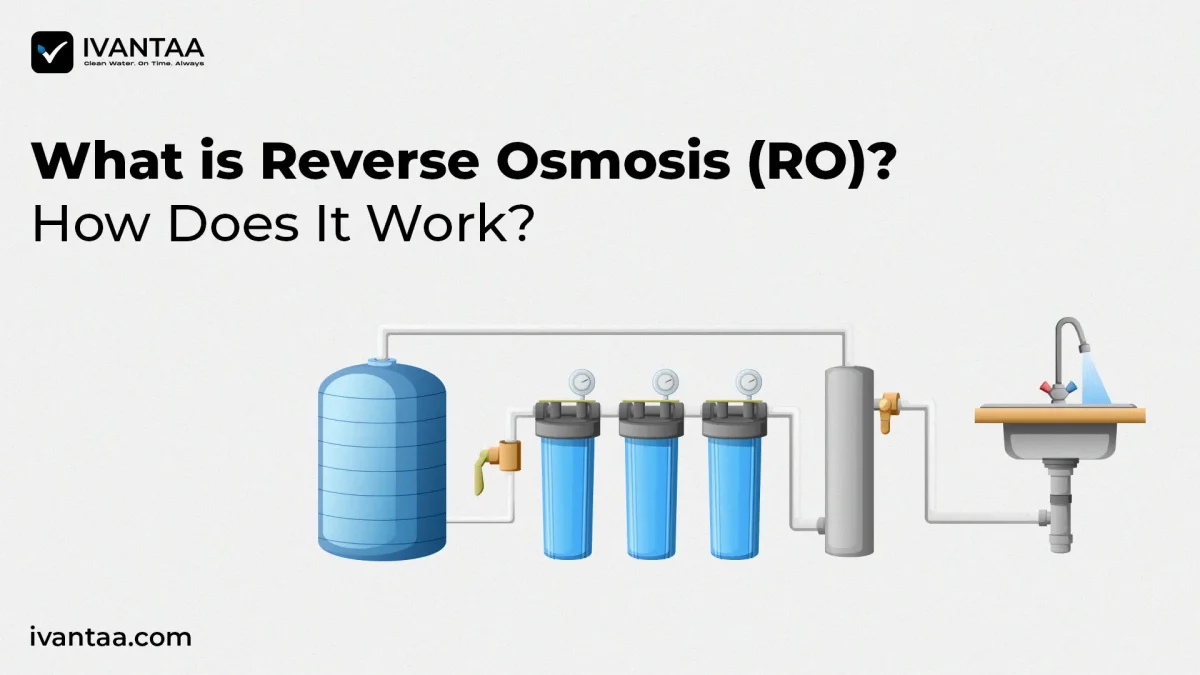
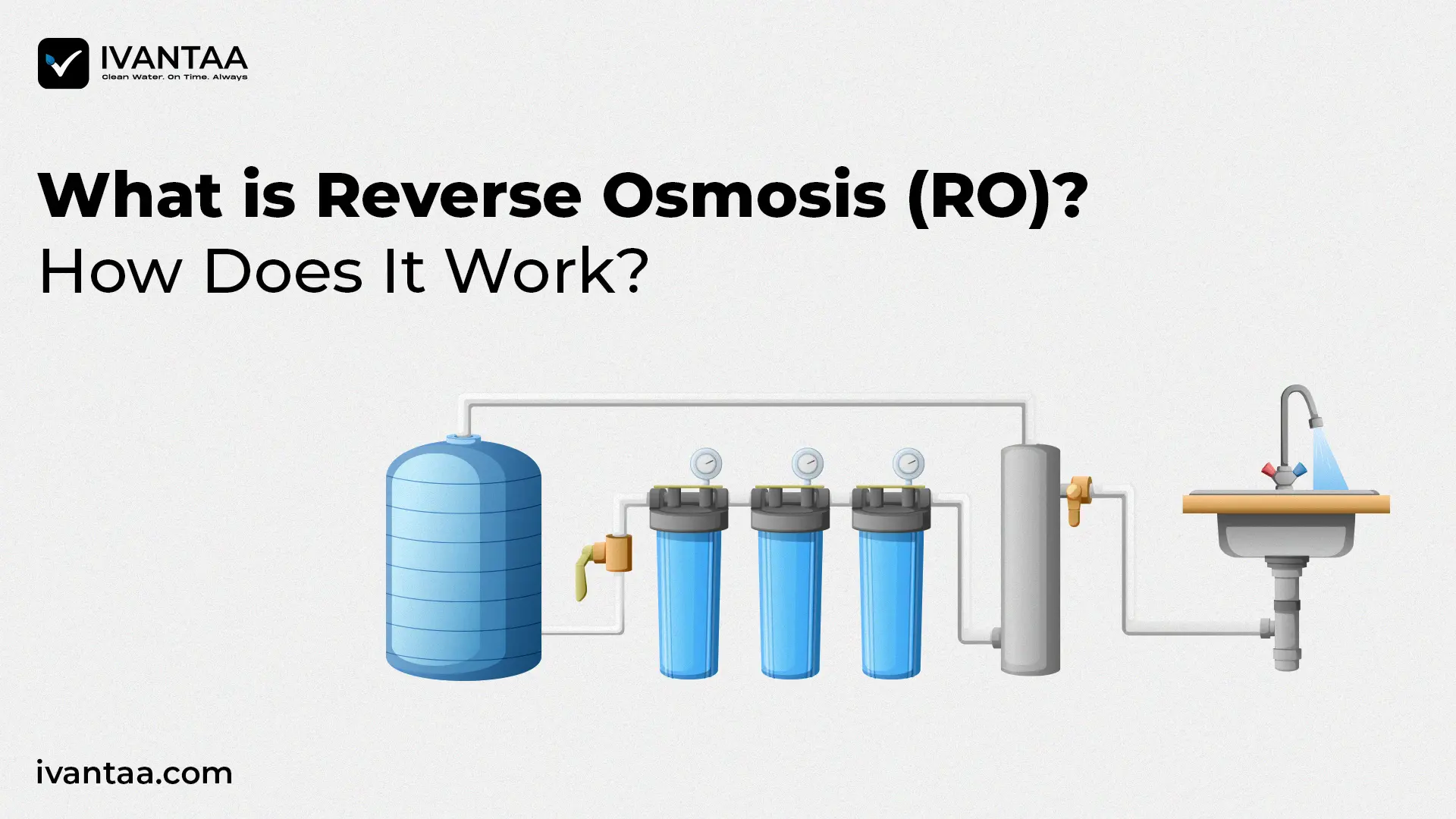
What is Reverse Osmosis (RO)? How Does It Work?

Clean drinking water is such a basic need, yet most homes today still struggle with unclear taste, rising TDS levels, or doubts about what’s really flowing from the tap. That’s exactly why RO purifiers have become so popular: they 

promise water that’s safer, clearer, and easier to trust. But what exactly is RO, and why does everyone swear by it? 

Understanding RO: What it is and How Does it Function?

When you hear “RO,” it stands for Reverse Osmosis. In simple terms, RO is a water-purification process that uses a special, semi-permeable membrane plus pressure to separate pure water molecules from contaminants.

Because of this efficient membrane filtration, RO is widely used to make drinking water safer, whether from taps, borewells, or municipal supplies.

What is RO Water? 

“RO water” refers to water that has undergone the reverse osmosis purification process. The result: water that’s largely free of dissolved solids, heavy metals, microbes, and many other kinds of contaminants.

In many households, this water is used for drinking, cooking, and sometimes even washing, especially where water quality from the source is questionable.

How does RO work (H3)

Reverse Osmosis (RO) works by pushing water through a semi-permeable membrane using pressure. This membrane acts like an ultra-fine sieve, allowing only pure water molecules to pass while blocking dissolved salts, heavy metals, chemicals, and microbes. Before reaching the membrane, the water usually goes through pre-filters that remove dust, chlorine, and larger impurities. As pressure drives the water through the membrane, clean water collects on one side, while the contaminants are flushed out as waste. The result is safer, clearer, better-tasting drinking water for your home.

What Does Reverse Osmosis (RO) Mean in Water Purification?

RO isn’t just a filter; it’s a membrane-based purification system. Unlike basic filters that mainly strain out larger particles, RO operates at a molecular level to remove dissolved contaminants.

Here’s how it works:

  • A semi-permeable membrane acts like a highly selective barrier. Water molecules (tiny and simple) can pass through. Solutes like salts, heavy metals, microbes, and many other impurities are blocked.
  • To make this happen, the system applies pressure to the incoming water. This pressure forces water through the membrane in the “reverse” direction compared to natural osmosis.

Because of this mechanism, RO can purify water to a level that most simple filters can’t match.

How the RO Membrane Filters Water

At the core of any RO purifier is the RO membrane, the heart of the process.

  • The membrane’s pores are extremely small (on the order of nanometres), small enough to block dissolved salts, heavy metals, micro-organisms, and many chemical contaminants.
  • When pressurized water hits the membrane, only “clean” water molecules pass through to the other side. Everything else, impurities, contaminants, dissolved solids, is left behind.
  • The “bad stuff” is flushed away as waste (often called “reject water” or “brine”), while the purified “permeate” water is collected for drinking or cooking.

In effect, the membrane acts like a microscopic sieve but far more advanced than ordinary filters.

The Role of Pressure in Reverse Osmosis

Pressure is not a footnote; it’s vital. The “reverse” in reverse osmosis literally means we’re pushing water the opposite way that natural osmosis would take it, and that requires energy.

  • For typical household water (fresh or mildly hard water), the system needs moderate pressure, usually within the capacity of normal water supply pressure in many homes.
  • Under pressure, water molecules are driven through the membrane; contaminants and dissolved solids are left behind. Clean water moves forward, and wastewater is flushed away.

Without proper pressure (or if pressure drops), RO’s effectiveness falls dramatically, so good RO systems ensure stable pressure and good pre-filtration.

Stages Involved in RO Water Purification

In practice, a household RO purifier involves multiple stages, not just the membrane. This multi-stage design helps both protect the membrane and improve water quality. A common sequence:

  1. Sediment Filtration (Pre-filter): removes visible particles, dirt, sand, rust, and dust that could clog or damage the membrane.
  2. Carbon (Pre-/Post-Carbon) Filtration: removes chlorine, some chemicals, volatile organic compounds (VOCs), and compounds that affect taste and odor. Also protects the membrane from chlorine damage.
  3. RO Membrane Filtration: the main filtration step where dissolved solids, heavy metals, microbes, and most contaminants are removed.
  4. Post-Filtration / Polishing (optional): after the membrane, water may pass through additional filters that ensure a clean taste, remove residual odor or chemicals, and improve overall water quality. Some systems even remineralize water, adding back beneficial minerals like calcium and magnesium for taste and health balance.

Because of these multiple stages, RO purification is more thorough than simple filters or carbon-only systems, giving you water that’s much closer to “pure” H₂O.

Why Households Prefer RO Purifiers

Given the complexity, why go for RO? Here are the common reasons many households choose RO:

  • High contaminant removal: RO water reduces heavy metals, dissolved salts, chemicals, microbes, and many impurities often much more effectively than regular filters.
  • Better taste and odor: Because chlorine, chemicals, and dissolved compounds are removed, the water tastes cleaner and doesn’t carry strange smells, making drinking and cooking water more pleasant.
  • Safe drinking water even from questionable sources: If your tap or borewell water has high dissolved solids or contaminants, RO gives peace of mind, something especially important in areas with industrial pollution, groundwater issues, or uncertain water quality.
  • Versatility: RO systems can work for water from municipal supply, borewell, or even treated water, making them a flexible solution for many households.

Because of this, RO purifiers have become widely popular in urban and semi-urban homes, especially where water quality may vary.

RO Water vs Regular Filtered Water – Comparison Table

Criteria

RO Water

Regular Filtered Water (Carbon / Sediment / Basic Purifiers)

Impurity Removal

Removes dissolved solids, heavy metals, chemicals, microbes, and fine contaminants

Removes chlorine, odor, some chemicals, and large particles; limited removal of dissolved impurities

Filtration Strength

High uses a semi-permeable membrane to eliminate microscopic contaminants

Moderate effective for taste and odor improvement but not deep purification

Mineral Content

Reduces or removes natural minerals like calcium & magnesium

Retains most natural minerals

Taste

Clean, neutral, sometimes “flat” due to low mineral content

More natural taste; mineral-balanced

Best For

Areas with hard water, high TDS, heavy metals, unreliable water quality

Areas with relatively clean municipal water

Safety Level

Very high suitable for poor or unpredictable water quality

Good for basic purification when water quality is already decent

Operating Method

Reverse Osmosis + often UV/UF for added safety

Mechanical filtration (sediment) + chemical adsorption (carbon)

Maintenance Need

Requires regular membrane & filter changes

Lower maintenance; mainly filter replacements

Cost

Higher (or low with rental plans) due to advanced tech

Lower, budget-friendly

Simple Maintenance Tips for RO Systems

If you install an RO system at home, maintaining it properly helps ensure it stays effective and safe. Here are a few practical tips:

  • Change pre-filters and carbon filters regularly. These protect the membrane if they’re clogged or saturated; membrane life drops, and performance suffers.
  • Monitor water pressure. RO needs a stable enough pressure to push water through the membrane; low pressure reduces purification efficiency.
  • Use a “remineralizer” or mineral cartridge (optional but useful). This helps add back essential minerals removed during filtration, improving taste and health balance.
  • Be mindful of wastewater (reject water). Many RO systems discard some water as waste; you can reuse that water for non-drinking purposes like cleaning or gardening, especially valuable in water-scarce places.
  • Periodic servicing and membrane replacement. Over time, membranes can wear or get fouled (scaling, deposits). Proper servicing ensures long-term performance.

If you’re renting a purifier or using a water purifier on rent make sure the provider offers regular maintenance and filter replacement. This helps keep water safe without you having to worry about technical upkeep.

Conclusion

Reverse osmosis offers a scientifically sound, highly effective way to purify water far beyond what regular filters can achieve. By using a semi-permeable membrane under pressure, RO removes dissolved salts, heavy metals, microbes, and many contaminants, giving households clean, safe drinking water even if the source quality is questionable.

At the same time, because RO also strips out natural minerals, it’s worth considering a system with remineralization or ensuring you get minerals from other dietary sources.

For many families, especially in areas with hard water or uncertain supply quality, RO remains one of the most reliable ways to ensure water safety, taste, and long-term health.

FAQs

How much time does RO take to purify water?

RO purification is continuous: as long as water flows through the system under adequate pressure, purified water is produced. The time per litre depends on water pressure and system design, but for standard household units, it’s typically just a few minutes.

Yes, it’s generally safe, but because RO removes minerals, it’s advisable to ensure you get adequate minerals from your diet or a remineralizing filter.

You can replace pre-filters or carbon filters if you’re comfortable, but for membrane replacement or deep servicing, a professional or your purifier rental/service provider is recommended.

Boiling can kill any residual microbes (though RO already removes most); it doesn’t restore minerals removed by RO. For better taste or mineral balance, a remineralizing filter is more effective.

Common issues include membrane fouling or scaling (due to the buildup of minerals/salts), pressure drops, filter clogs, and excessive wastewater. Regular maintenance helps prevent these.