



Is Delhi’s Drinking Water Safe? Health Risks, Contaminants & Home Purification Solutions

You’re making a wise decision if you’re looking for an RO water purifier to rent in Delhi…

Is Delhi’s Drinking Water Safe? Health Risks, Contaminants & Home Purification Solutions

You’re making a wise decision if you’re looking for an RO water purifier to rent in Delhi. Clean and purified drinking water is a necessity, not a luxury, in today’s world. Delhi water quality concerns have led many residents to question that assumption. Queries like “Is Delhi tap water safe?” are becoming more frequent due to factors like growing population density, deteriorating pipes, contaminated water sources, and uneven infrastructure. 

Municipal authorities treat water before distribution. Challenges such as pipeline contamination, water storage issues, and environmental pollution make water purification for the home an important consideration. Choosing the best RO purifier rental will suit your lifestyle and budget. 

Understanding Delhi’s Water Quality Challenges

Delhi is mostly dependent on water from nearby states, the Yamuna River, groundwater sources, and water supplied from neighboring states. Municipal water quality issues affect the supply before it reaches homes, even after treatment in water facilities.

Major Challenges:

  • Older pipes that can explode or let contaminants enter
  • Urban water contamination due to industrial discharge and sewage mixing.
  • Intermittent supply, resulting in negative pressure in pipes (which can pull contaminants)
  • Contamination during storage in improperly maintained overhead tanks

These elements have a crucial role in the ongoing water contamination in Delhi.   

Common Contaminants Found in Delhi’s Water

During distribution, pollutants can still enter even purified water.

  1. Contaminants that are physical
  • Particles of rust
  • Solids in suspension and sediment
  1. Chemical Contaminants
  • The total dissolved solids (TDS) are high.
  • Lead and iron are examples of heavy metals.
  • Chlorine residue
  1. Pollutants that are biological
  • The bacteria
  • Viruses
  • Parasites

Delhi’s drinking water safety is increasingly threatened by harmful contaminants present in the water supply. Such exposure increases contaminated drinking water health risks like weak immunity, toxicity, and digestive problems.

How Water Contamination Impacts Daily Life

Unsafe water affects health, ecosystems, and the economic productivity of daily life. 

  • Unpleasant taste and smell of cooking

  • Skin irritation and hair damage while taking a bath

  • Scaling in machines such as kettles and geysers

  • Increased medical expenses due to waterborne illness

Over time, these challenges underscore the importance of water purification in sustaining household health and comfort. 

Why Municipal Water Treatment Alone May Not Be Enough

Municipal water treatment plants originated to remove major contaminants. Fortunately, the last-mile delivery system has an issue. 

Among the causes are:

  • Cross-contamination caused by sewer line damage

  • Stale water in pipelines

  • Variations in the quality of source water

  • Unexpected cases of water combination

Therefore, while treatment facilities play a crucial role, using them entirely might not ensure consistent Delhi drinking water safety at the tap level. 

The Function of Household Water Purification

The primary functions of household water purification are the removal of physical impurities, the reduction of chemical contaminants, the elimination of microorganisms, the improvement in taste and odor, the protection against last-mile contamination, and supporting overall health and well-being. In short, it is about ensuring safety, enhancing quality, and protecting health. 

Given ongoing Delhi water quality concerns, installing an indoor water purification system provides an advanced level of safety.  

Benefits of purifying water at home: 

  • Minimize TDS and contaminants 
  • Removes any extra impurities
  • Removes viruses and bacteria 
  • Enhance smell and remove chlorine
  • Brings more comfort to drink 

This clearly shows the urgent need for a water purifier at home, especially in cities with vast pipeline networks..

Types of Water Purification Technologies Used at Home


Every purifying system is different. The level of contamination and the source of your water will impact which one is best for you.

Types are:

  1. Reverse Osmosis (RO)
  • Best for water with high TDS
  • Removes dissolved contaminants and heavy metals
  1. Ultraviolet Purifiers (UV)
  • Kills bacteria and germs
  • Suitable for municipal supplies with low TDS levels
  1. Ultrafiltration (UF)
  • Removes suspended particles and microbes
  • Can work without electricity
  1. Activated Carbon Filters
  • Improves odor and flavor
  • Reduces chlorine

For complete safety, a lot of modern devices mix RO, UV, and UF.

Choosing the Right Water Purifier for Your Home

It is very important to understand specific needs before investing in water purification for the home. 

Consider: 

  • Monitoring the TDS level of water 
  • Identifying your water supply (borewell or municipal)
  • Requirements of storage capacity
  • Costs of cleaning filters
  • Service mobility and brand trust

An RO-based system is generally suggested if TDS levels are higher than 300 ppm. UV or UF systems may function well for lower TDS water that has microbiological problems. Making a wise decision ensures effective household water purification and continuous security.

Lessons from Delhi for Other Urban Cities

Delhi’s problems are not exclusive. Cities all over the world have been affected by rapid urbanization, industrial growth, and infrastructural strain.

Delhi’s issue may act as an example for other urban areas dealing with municipal water quality issues:

  • Invest in ongoing pipeline maintenance.
  • Promote water testing in households.
  • Boost public awareness of the water combination in Delhi and similar urban areas. 
  • Promote the use of home filtration devices.

Urban populations must understand the importance of water purification as part of preventive healthcare.

Final thoughts

The challenge regarding Delhi water quality concerns isn’t only visible pollution but also hidden contamination. So, is Delhi’s tap water safe? It may not always be, which highlights the need for household water purification at home. Investing in a trustworthy water purifier protects your family and offers safe, clean drinking water every day.

Clean water isn’t a luxury; it is a basic requirement, and ensuring its safety begins at home.

FAQs

How long does water filter installation take?

Typically, the time required to install a water filter will range from 30 to 45 minutes. If the installation is taking longer than this time, then there is usually an issue with the installation being done correctly.

Yes, installing a water filter by yourself is possible if you are knowledgeable about the basics of plumbing. However, a lack of knowledge may lead to small mistakes being made that result in leaks and preventable loss of time.

If your tap water runs slowly, it is an indication that your water pressure is too low for an RO purifier. It requires a constant flow of water at a sufficient pressure in order to operate correctly.

The best location to install your water purifier in your home is near the kitchen’s water line, drain, and power outlet access; convenience takes precedence over concealment.

After the water purifier has been installed, pre-filters must be replaced every six to twelve months. If the pre-filters are replaced regularly on time, this will extend the longevity of the RO membrane.
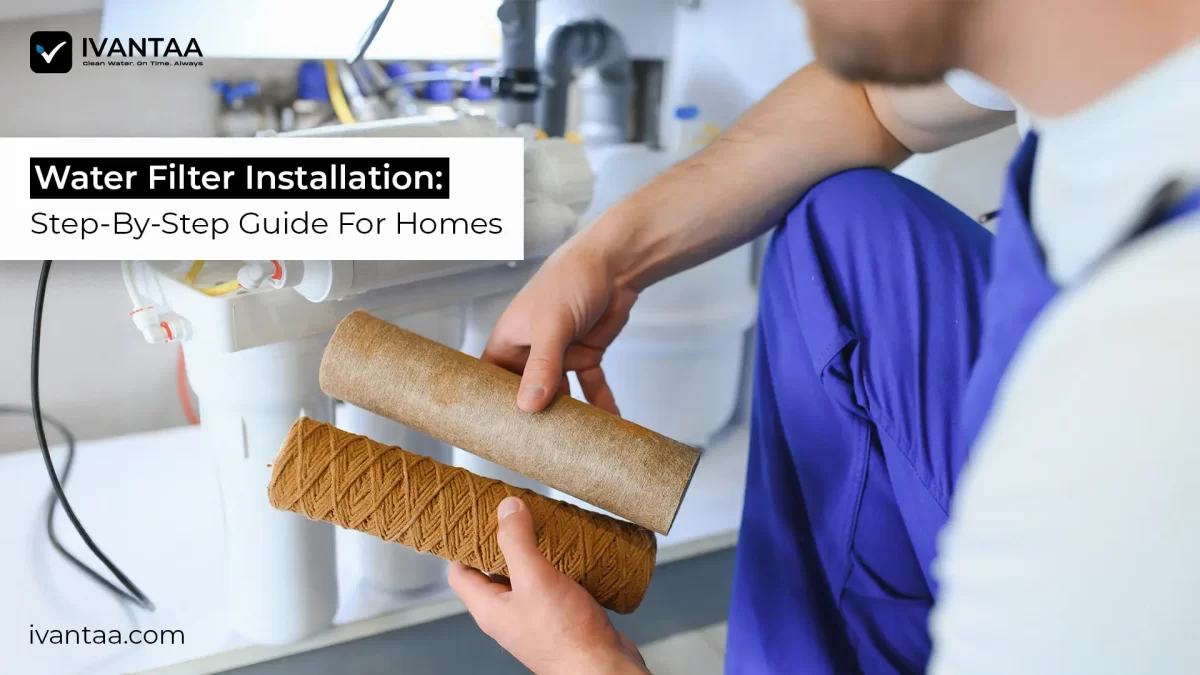
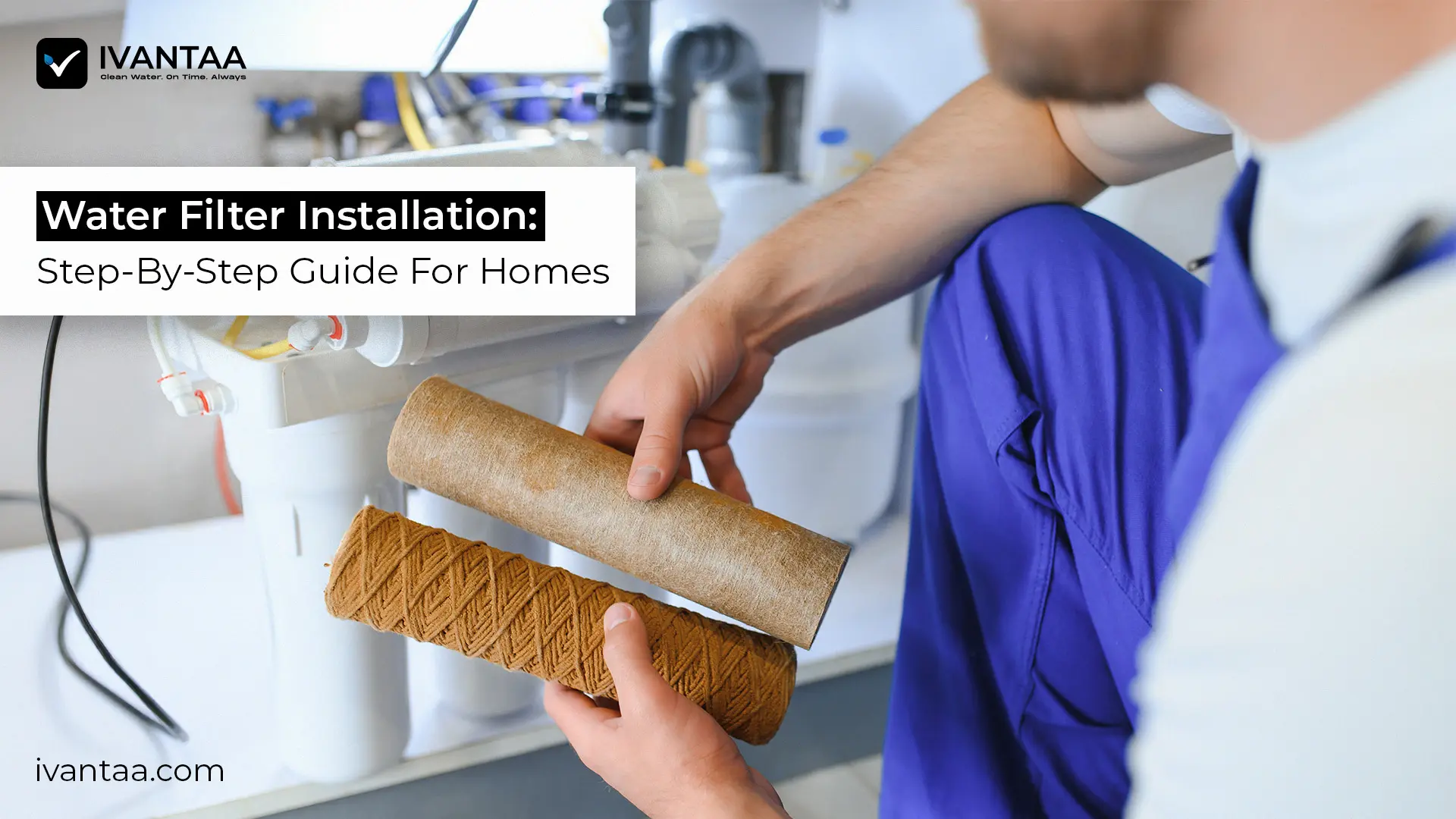
How to Install a RO Water Filter at Home

Safe drinking water is something every household needs every day. When water is not properly purified, it affects health over time.

How to Install a RO Water Filter at Home

Safe drinking water is something every household needs every day. When water is not properly purified, it affects health over time. A water purifier helps remove impurities, but it works correctly only when it is set up the right way at home.

To maintain the RO water purifier installed in your home, knowing how to install the filter is crucial. A poorly installed water purifier, with loose connections, inconsistent water flow, and incorrect placement, leads to a poorly working water filter.

This article serves as a water filter installation guide that explains how to install a purifier correctly at home without confusion.

How to Check Your Home Water Supply Before Installation

Before water filter installation, you must know what source of water you are getting for your home.

  • Municipal water – typically, this water has a consistent water pressure and low salt content.
  • Borewell water – this water contains high dissolved impurities and hardness, and typically has low water pressure.
  • Tanker water – the quality of tanker water often contains visible impurities and varies regularly.

Knowing the above information will help you install a water filter aligned with your current water source.

What Are All the Tools and Components You Need

It’s essential to gather all tools and parts before starting the water purifier filter installation process. The following items are required for this installation:

  • Adjustable wrench for tightening fittings.
  • Drill and wall anchors for securing the water purifier to the wall.
  • Teflon tape (for sealing pipe joints to prevent water leakage).
  • Inlet valve and food-grade pipe (to control the flow of water into the water purifier and the delivery of purified water to your kitchen faucet).
  • RO + UV unit with storage tank (to filter and store purified drinking water).

Each component has a specific function; the inlet valve controls the flow of water into the purifier, the food-grade pipe is used to safely carry water to and from your home, and the multi-stage filters are responsible for filtering the water.

Poorly installed or missing parts could result in leaks at the connections or slow water flow from your kitchen faucet.

Selecting the Correct Installation Location

When possible, place the water filtration system as close to the water source as possible to provide a continuous supply of water during water filter installation. If installed as a wall-mounted unit, ensure that a strong mounting surface supports the weight of a full storage tank.

The power outlet should be located near the water filtration system so that the ultraviolet light will illuminate when you pour water from the storage tank. Finally, ensure that the slope of the drain pipe allows wastewater to drain away properly.

Step-by-Step Installation Process for an RO plus UV Water Filter

There are many different ways to install a RO + UV water filter, but this is the typical order in which installations are performed in residential homes:

  1. Turn off the main water supply.
  2. Attach the inlet valve to the cold water line.
  3. Attach the sediment filter to the inlet valve.
  4. Securely mount the purifier to the wall.
  5. Attach internal pipes as marked for water flow direction.
  6. Connect the drain pipe to the sink outlet.
  7. Connect the storage tank to the tap.
  8. Plug the purifier into a safe electric socket.

By completing the installation in this manner, you will have a good flow of water through the entire ro water purifier installation process, and you’ll avoid issues thereafter.

Initial Flushing, Testing, and Calibration

After your water purifier is installed, flush your unit for approximately thirty minutes, then discard the contents of the first tank. The purpose of this process is to remove any remaining fine carbon particles from inside your filter, and to also remove any cleaning agents or residues that may be present.

Make sure to check every joint in your installation for signs of leaking and ensure a steady flow of water. If your unit provides you with water quality readings, check that your readings are lower after being purified. Finally, make sure that the UV indicator is lit when water is being dispensed.

Electrical Safety and Power Management

Electricity is essential to the safe functioning of an RO UV water purifier. Use a grounded connection location and do not connect any electrical appliance that uses a high amount of electricity, like a microwave or a refrigerator, on the same circuit as the water purifier, because these could cause damage.

How to Avoid Common Installation Problems

Many issues arise from the failure to adhere to standard water purifier installation tips. For instance, if you don’t check the water pressure prior to installing, you will likely have low output.

Drainage plate location errors can cause backflow issues, so you should flush your system. If connections are loose, this can lead to leaks that could eventually go unnoticed.

Why Some Homes Choose RO Water Purifier Rentals

Many Indian households prefer RO UV water purifier rentals because they eliminate the troubles associated with maintenance. With rental services, customers don’t have to do any installation, service, or filter replacements by themselves. The monthly subscription cost covers everything, from installation to filter replacement to servicing.

Ivantaa Rentals provides RO + UV water purifier services that come with free installation, free servicing, and free regular filter replacements. You only need to pay a fixed, affordable monthly cost, and everything is automatically covered.

It’s ideal for households that want to have drinkable water at all times and do not wish to be bothered with the various issues involved with setting up the water purifier, or feeling tied down to a long-term owning commitment.

Conclusion

Correct installation determines the performance and longevity of your water purifier. You should monitor your water for leaks, taste, and flow during the first week of operation to assist in identifying possible service issues before they happen.

As long as your purifier is properly installed, the process of regularly changing the filtration system will be less cumbersome and will give you an ongoing supply of safe and pure drinking water.

If you are looking for an easier way to get safe drinking water at home, contact us to explore our RO + UV water purifier rental demo options and choose a plan that fits your needs.

FAQs

How long does water filter installation take?

Typically, the time required to install a water filter will range from 30 to 45 minutes. If the installation is taking longer than this time, then there is usually an issue with the installation being done correctly.

Yes, installing a water filter by yourself is possible if you are knowledgeable about the basics of plumbing. However, a lack of knowledge may lead to small mistakes being made that result in leaks and preventable loss of time.

If your tap water runs slowly, it is an indication that your water pressure is too low for an RO purifier. It requires a constant flow of water at a sufficient pressure in order to operate correctly.

The best location to install your water purifier in your home is near the kitchen’s water line, drain, and power outlet access; convenience takes precedence over concealment.

After the water purifier has been installed, pre-filters must be replaced every six to twelve months. If the pre-filters are replaced regularly on time, this will extend the longevity of the RO membrane.
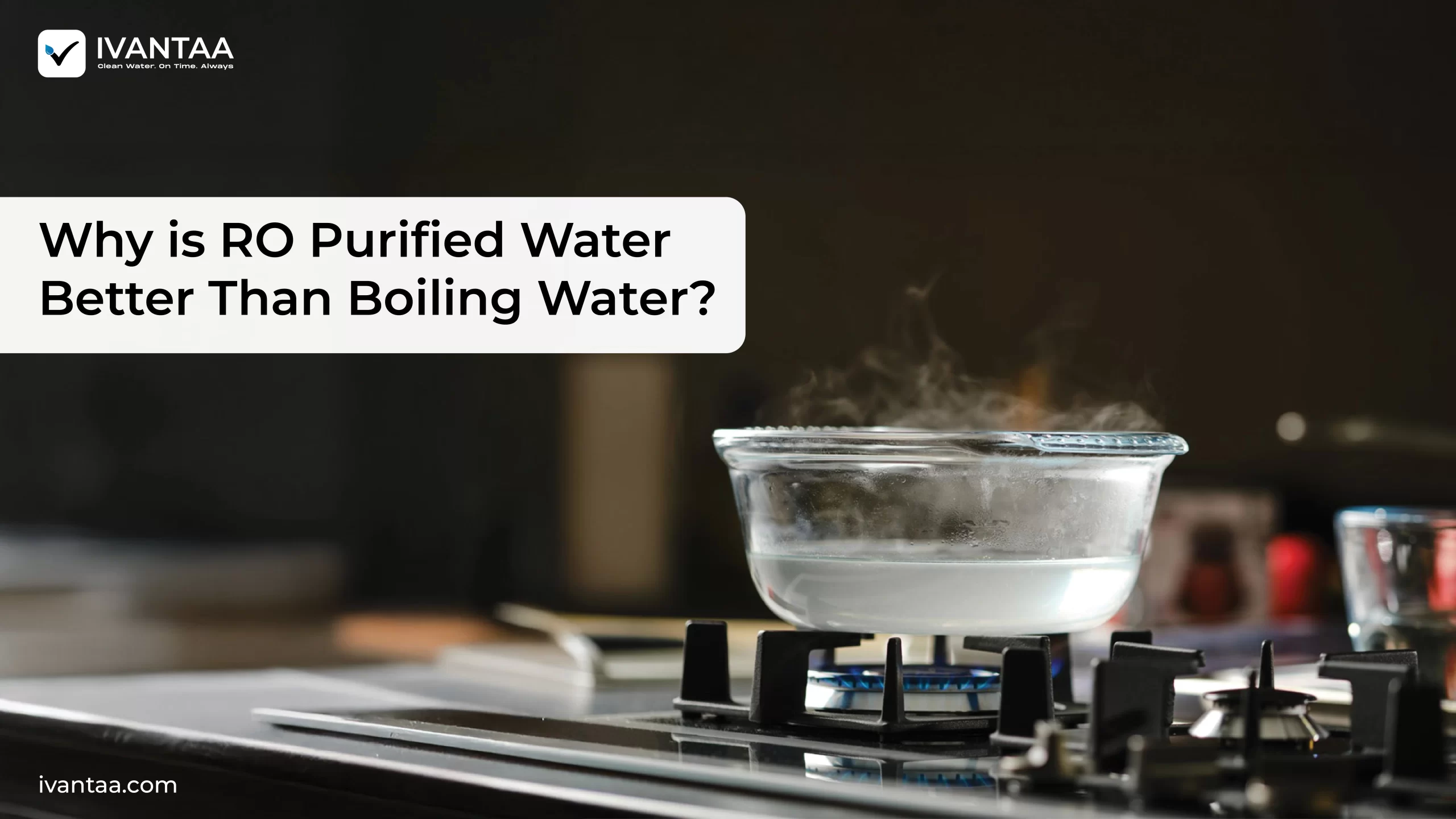
Why Is RO Purified Water Better Than Boiling Water?

Clean drinking water is something most of us assume we already have. Clean drinking water is something most of us assume we already have…

Why Is RO Purified Water Better Than Boiling Water?

Clean drinking water is something most of us assume we already have. Turn on the tap, boil the water if needed, and it should be safe. That belief worked decades ago, but today water contamination is more complex. Industrial waste, aging pipelines, dissolved salts, and heavy metals have changed the definition of safe drinking water.

If you have ever wondered whether boiling water is enough, or whether investing in a purifier actually makes sense, you are not alone. Many households still rely on boiling water for drinking, while others swear by modern purification systems.

What Is Boiled Water?

Boiling water is one of the oldest water purification methods known to us. The process is simple. Heat water to 100°C and keep it boiling for a few minutes. This kills most bacteria, viruses, and parasites that cause waterborne diseases.

Boiled water for drinking is effective in emergencies and for short-term use. It is often recommended during floods or when the water supply is temporarily unsafe.

However, boiling does not remove dissolved impurities. If your tap water contains excess salts, fluoride, nitrates, arsenic, or lead, boiling may actually increase their concentration because some water evaporates while contaminants remain.

According to the World Health Organization, boiling improves microbiological safety but does not remove chemical contaminants or heavy metals.

What Is RO Purified Water?

RO Purified Water is produced using Reverse Osmosis technology. In this process, water passes through a semi-permeable membrane that blocks dissolved solids, harmful chemicals, and heavy metals. Most modern systems also include UV or UF stages for microbial safety.

RO water benefits go beyond killing germs. It targets invisible contaminants that boiling simply cannot address. This makes it a preferred solution for long-term home use, especially in cities where water quality varies from area to area.

How Boiling and RO Purification Work

Let us simplify this.

Boiling water works by heat. Heat destroys microorganisms but leaves physical and chemical impurities untouched.

RO purification works by pressure. Water is forced through a membrane fine enough to stop dissolved salts, heavy metals, pesticides, and other contaminants. When paired with UV, it also ensures bacteria and viruses are neutralized.

This difference alone explains why water filter vs boiling water is not an equal comparison. One improves safety partially; the other addresses safety at multiple levels.

RO Purified Water vs Boiling Water: Key Differences

When comparing filtered water vs boiled water, these are the real-world differences that matter.

  • Impurity Removal
    Boiling kills germs but does not remove TDS, heavy metals, or chemicals. RO removes dissolved solids, arsenic, lead, fluoride, and industrial pollutants.
  • Taste and Odor
    Boiled water often tastes flat or metallic due to concentrated salts. RO water tastes lighter and cleaner because excess minerals and contaminants are removed.
  • Energy and Effort
    Boiling requires gas or electricity daily, time for cooling, and storage hygiene. RO systems work on demand with minimal effort.

  • Consistency
    Boiling quality depends on time and temperature. RO delivers consistent purification every time.

Example

A family living in an urban apartment where tap water TDS is around 600 ppm. They boil water daily, believing it is safe.

After boiling, bacteria may be gone, but dissolved salts, fluoride, and trace metals remain. Over time, the family notices scale buildup in utensils, bitterness in tea, and stomach discomfort.

When they switch to RO water for home use, TDS drops to a balanced level. Tea tastes better, digestion improves, and they no longer worry about what is invisible in their water.

This is not an extreme case. It is a common urban reality.

When Is Boiling Water Still Useful?

Boiling water still has its place. It is useful when:

  • There is a temporary contamination alert
  • You are traveling or camping
  • Power or purifier systems are unavailable
  • Water quality is already low in TDS and chemicals

For short-term drinking water safety, boiling is effective. But relying on it daily assumes your water has no chemical or heavy metal contamination, which is rarely verified.

Why RO Purified Water Is the Better Choice for Daily Use

Daily hydration is not about emergency survival. It is about long-term health.

RO water benefits include protection from heavy metals, controlled mineral balance, better taste, and consistent safety. Unlike boiling, RO purification adapts to modern water challenges.

The debate of RO Purified Water vs Boiling Water ultimately comes down to what risks you want to ignore. Microbes are only one part of water safety. Chemical contamination is the silent problem.

For families with children, elderly members, or anyone consuming water throughout the day, RO offers peace of mind that boiling cannot fully provide.

Understanding TDS and Why It Matters

TDS stands for Total Dissolved Solids. It includes salts, minerals, and metals dissolved in water.

Low TDS water tastes flat. Extremely high TDS water strains the kidneys and affects digestion. Safe drinking water usually falls between 50 to 300 ppm depending on source and health needs.

RO systems regulate TDS effectively, while boiling water does nothing to control it. This is a key reason why water filter vs boiling water comparisons consistently favor RO for daily use.

Conclusion

Safe drinking water today requires more than heat. While boiling water removes bacteria, it does not address the full spectrum of contaminants present in modern water supplies.

RO purification combines technology, consistency, and convenience. For households looking to rent an RO water purifier, this approach offers a practical way to meet today’s water quality challenges without long-term commitments. It aligns better with modern health expectations and sustainable living needs.

If your goal is truly safe drinking water, and not just habit-based safety, choosing to rent an RO water purifier becomes the smarter, more flexible choice.

Still boiling water every day and hoping it is enough?
Upgrade your daily hydration with an RO purification system designed for modern homes. Enjoy better taste, consistent safety, and zero daily effort.

Explore Ivantaa’s RO rental options today and experience what clean water should actually feel like.

FAQs

Can I use a spun filter and a sediment filter together in one system?

Yes, and it’s actually ideal. Spun filters catch heavy particles, while sediment filters handle finer dust.


If the flow reduces or your water tastes different, it’s time to replace the filter.


No. They remove only suspended particles, not dissolved solids.

Most areas use borewell water mixed with municipal supply, so a spun filter at the inlet and a sediment filter next is the most effective combination.