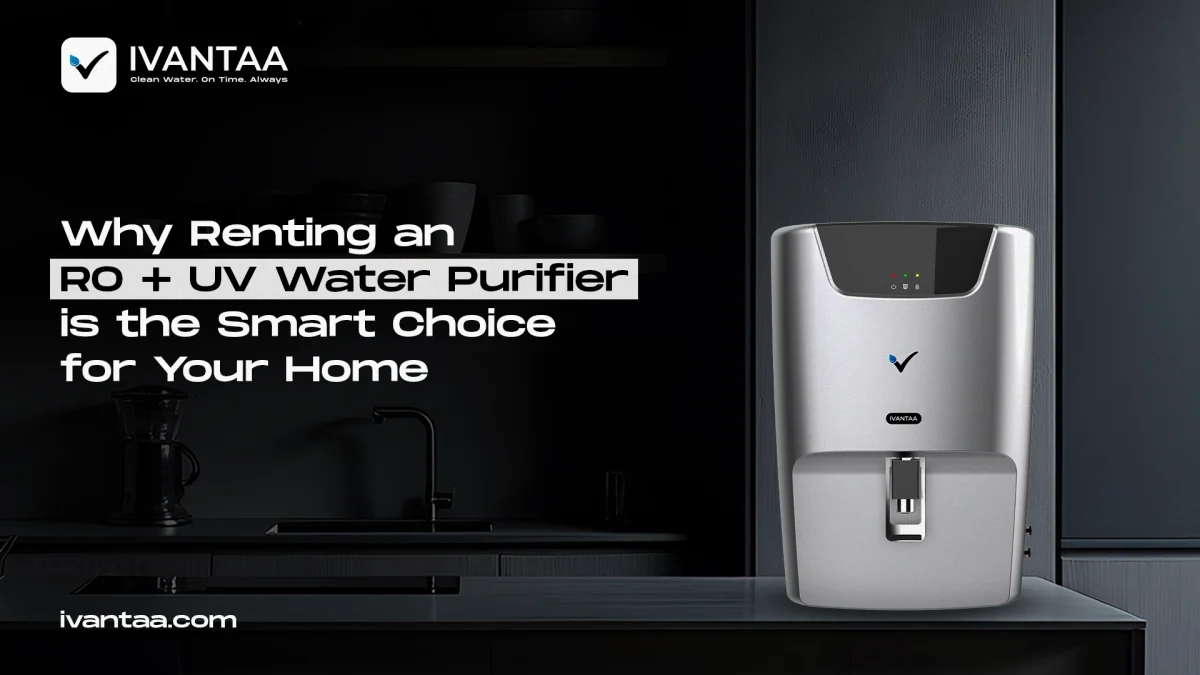






RO Rental Cost in Delhi: Complete 2026 Price Guide

People need clean drinking water every day, but buying a purifier right away is not always…

RO Rental Cost in Delhi: Complete 2026 Price Guide

People need clean drinking water every day, but buying a purifier right away is not always possible. That’s why a lot of homes and businesses are now looking into RO rent costs in Delhi.

Renting gives you access to safe drinking water without the hassle of ownership, maintenance, or high initial costs. Where plans start at just ₹399 per month, which makes it an increasingly popular option in 2026. 

What Is the Average RO Rental Cost in Delhi in 2026?

The RO water purifier rent per month in Delhi is usually between ₹300 and ₹1200. This is especially true now that people are looking for flexible rental plans. 

A simple explanation:

  • Basic RO models cost between ₹300 and ₹500 per month.
  • Mid-range RO + UV/UF systems basically cost between ₹500 and ₹800/month.
  • For advanced models with minerals and smart features, the range is between ₹800 and ₹1,200 per month. 

Choosing the most affordable RO rental in Delhi, which usually includes free installation and no-cost services, is now the option that people are looking for when they need flexible rental plans.  

Factors That Affect RO Rental Cost in Delhi

The RO rental cost in Delhi may vary depending on the plan, but the main reasons for the price differences are usually related to the system and service coverage. Knowing these things can help in choosing a trustworthy plan.

Several factors impact the final cost when you rent an RO water purifier in Delhi:

1. Type of RO System

Basic RO systems are usually available at lower price points, while advanced models with additional purification stages, such as UV and UF, are priced slightly higher.

2. Filtration Technology and Features

RO purifiers with multiple purification stages, mineral retention, or advanced filtration features tend to have a rental cost. These systems are designed to improve water quality and taste.

3. Water Quality Requirements

In areas where water has higher TDS levels or requires deeper purification, more advanced RO systems are also recommended at the same price. 

4. Duration of the Rental Plan

Plans with longer terms usually give you more value for your money each month than plans with shorter terms, so they are a better choice over time.

5. Service and Maintenance Coverage

Plans with comprehensive maintenance coverage have the same monthly cost, and they ensure consistent performance and reduce the need for any additional expenses. 

Overall, the prices are set up to provide a balance between the quality of the water, the performance of the system, and the level of service support. Stop worrying about the installation and water filtration expenses while you’re having a no-cost rental RO system. 

RO Rental vs. Buying: Which Is More Cost-Effective in 2026?

This is one of the most important and common questions people often ask before choosing a water purifier rental in Delhi

On the other hand, water purifier rental in Delhi offers a much simpler and stress-free experience:

Why Renting Makes More Sense:

  • No high cost.
  • Plans that start at ₹399.
  • Free installation every time. 
  • Quick and hassle-free setup.
  • Replace with higher models.

Renting an RO with free maintenance in Delhi is becoming the most popular choice. It gives you clean, safe water without having to pay for it up front, worry about maintenance, or make a long-term commitment. 

What’s Included in Most RO Rental Plans in Delhi?

The providers offering RO rental plans in Delhi include more than just the machine. A standard package usually covers: 

1. No cost for installation

No extra fees for setting up, which saves your money.

2. Maintenance on a regular basis

Regular maintenance is included to keep the purifier running smoothly.

3. Changing the filter

Depending on how much you use them, many plans include filter changes at no extra cost.

4. Help and repairs

If something goes wrong, expert technicians will visit soon. 

5. Flexible Plans

Monthly, quarterly, or yearly options let you choose what suits your lifestyle.

This is why many people prefer RO rental with free maintenance in Delhi, and it removes the hassle of unexpected repair costs.

How to Choose the Right RO Rental Plan in Delhi

So many RO plans to choose from that it can be hard to know which one to pick. This is how to make a good choice: 

1. Quality of Your Water

To make sure the output is safe and consistent, it’s best to get a better RO system with more steps for purifying the water. 

2. Choose the Right System Type

Choosing a model with the right filtration technology will make it work better and last longer.

3. Check What’s Included in the Plan

The RO rental plans in Delhi should include installation, regular servicing, and filter replacement at no cost.

4. Choose a Reliable Service Provider

It’s more important to have maintenance done on time and problems fixed quickly at no cost. 

5. Look for Plan Flexibility

Plans that offer upgrades and relocation make things easier without long-term complications.

By focusing on water quality, system features, and service support rather than high cost, it becomes easier to select a plan that delivers complete coverage, offers value, and eliminates additional expenses. 

Conclusion: Is RO Rental in Delhi Worth It in 2026?

In 2026, renting an RO is the best choice for most homes and businesses. With the RO rental cost in Delhi starting from just ₹399, you get clean, safe drinking water without worrying about maintenance, repairs, or upfront investment. 

If you’re someone who values convenience, doesn’t want a large upfront investment, or lives in a rented space, choosing a water purifier rental in Delhi at a reasonable price makes practical sense.

FAQs

How long does water filter installation take?

Typically, the time required to install a water filter will range from 30 to 45 minutes. If the installation is taking longer than this time, then there is usually an issue with the installation being done correctly.

Yes, installing a water filter by yourself is possible if you are knowledgeable about the basics of plumbing. However, a lack of knowledge may lead to small mistakes being made that result in leaks and preventable loss of time.

If your tap water runs slowly, it is an indication that your water pressure is too low for an RO purifier. It requires a constant flow of water at a sufficient pressure in order to operate correctly.

The best location to install your water purifier in your home is near the kitchen’s water line, drain, and power outlet access; convenience takes precedence over concealment.

After the water purifier has been installed, pre-filters must be replaced every six to twelve months. If the pre-filters are replaced regularly on time, this will extend the longevity of the RO membrane.
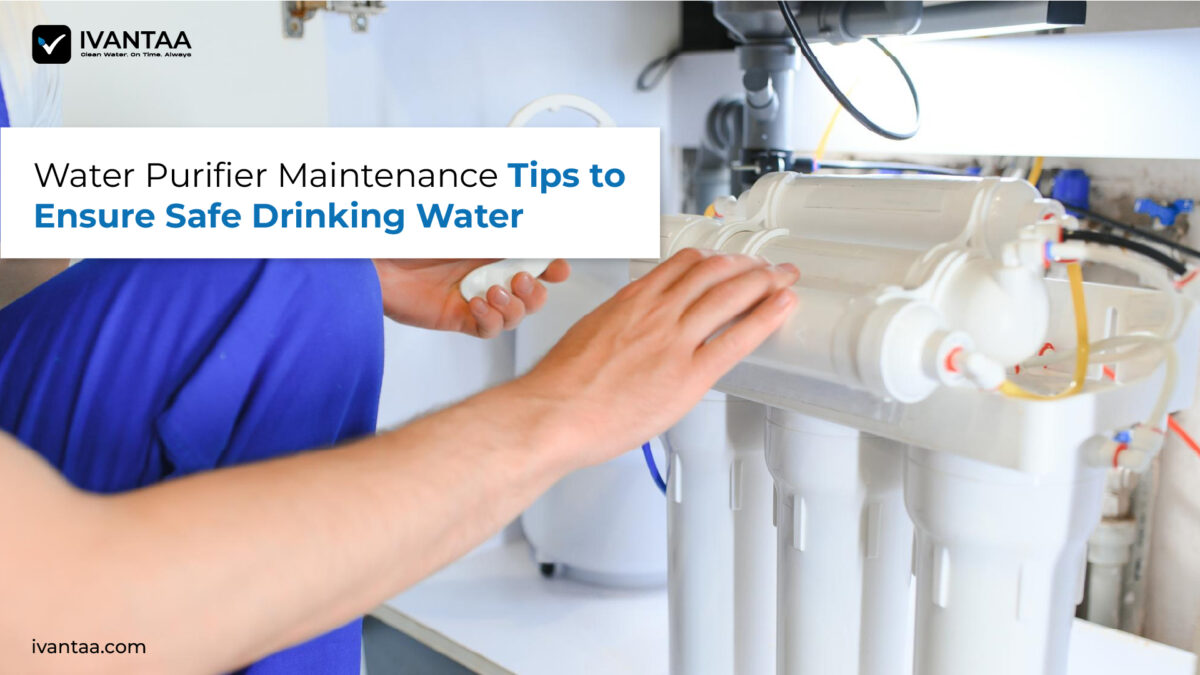
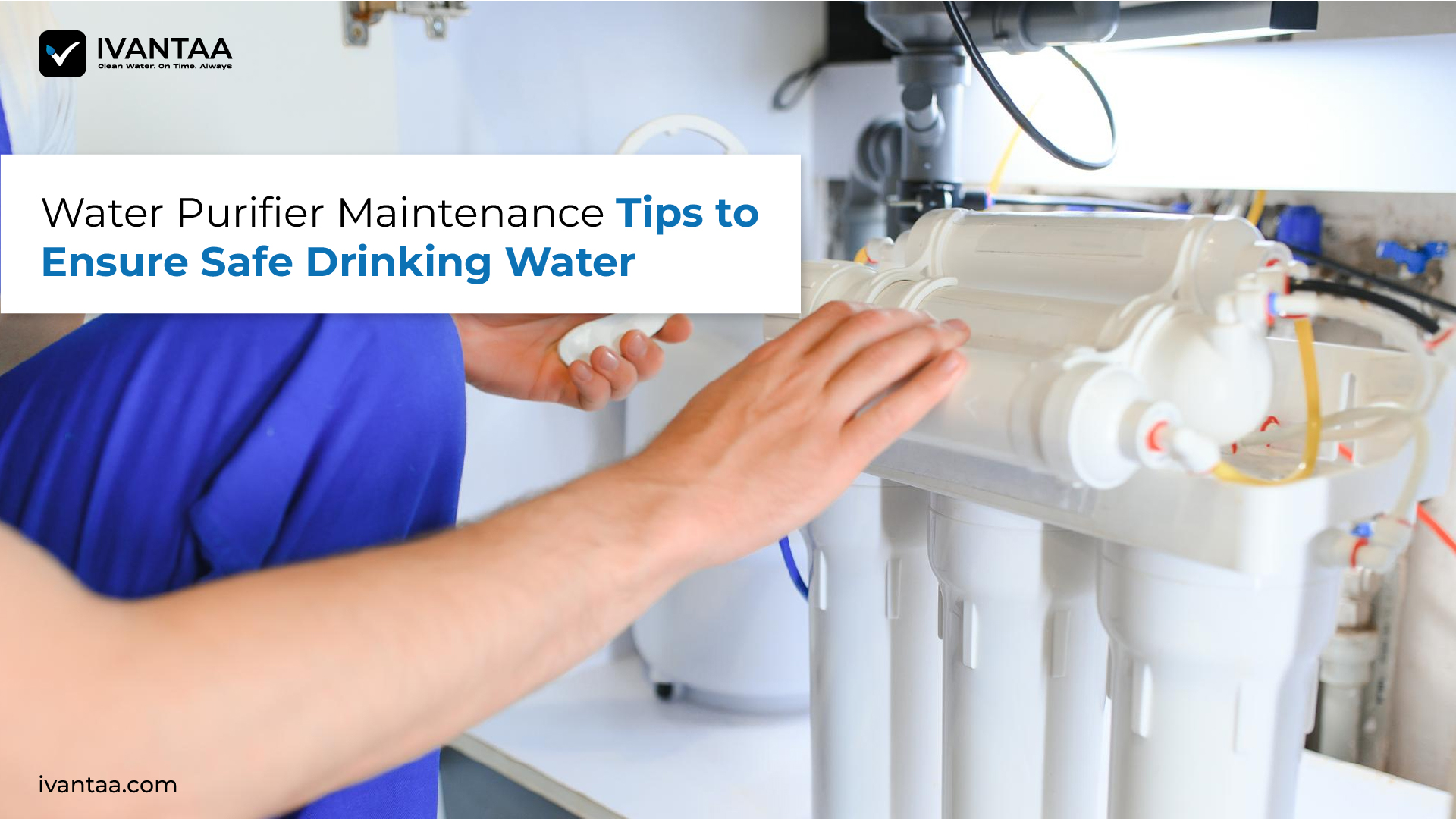
Water Purifier Maintenance Tips: How to Keep Your Drinking Water Safe and Clean

Access to safe drinking water depends not only on installing a purifier but also on maintaining…

Water Purifier Maintenance Tips: How to Keep Your Drinking Water Safe and Clean

Access to safe drinking water depends not only on installing a purifier but also on maintaining it properly. Many households install a system and forget about it until something goes wrong. In reality, regular water purifier maintenance is what ensures the system continues to remove contaminants effectively.

According to the World Health Organization, contaminated drinking water contributes to hundreds of thousands of deaths globally every year, largely due to microbial contamination and unsafe water treatment practices. Regular purifier servicing and filter replacement significantly reduce these risks.

If you rely on an RO purifier at home or in your office, following the right water purifier maintenance tips can help maintain water quality, extend the purifier’s lifespan, and prevent expensive repairs.

Why Regular Water Purifier Maintenance Matters

A water purifier works continuously to remove dissolved salts, chemicals, and microorganisms from water. Over time, filters, membranes, and cartridges accumulate impurities. If they are not cleaned or replaced, the purifier becomes less effective.

Regular water purifier service helps ensure that the system continues to perform at optimal efficiency. It also prevents bacterial growth inside the purifier, which can occur if filters are clogged or overdue for replacement.

Maintenance is especially important for RO systems because they contain multiple filtration stages. Proper RO water purifier maintenance ensures each stage functions correctly and removes contaminants before the water reaches your glass.

Another important reason is cost. Neglecting maintenance can damage internal components like pumps and membranes. Timely servicing avoids expensive replacements later.

How Often Should You Service Your Water Purifier?

Many users ask about the correct RO filter change frequency and service schedule. While the exact timeline depends on water quality and usage, there are some general guidelines.

Most manufacturers recommend professional water purifier service every three to six months. During this visit, technicians clean internal components, inspect filters, and check for leakage or pressure issues.

Filter replacement schedules usually follow this pattern:

  • Sediment filter: Every 3–6 months
  • Carbon filter: Every 6–12 months
  • RO membrane replacement: Typically every 2–3 years, depending on water TDS
  • Post-carbon filter: Around 12 months

These timelines can vary depending on water quality. Areas with higher TDS levels or heavy sediment may require more frequent purifier filter replacement.

If your household consumes a large amount of water daily, filters may also need replacement sooner.

Essential Water Purifier Maintenance Tips

Understanding how to maintain water purifier systems does not require technical expertise. A few simple practices can significantly improve performance and water quality.

1. Clean the External Body Regularly

Dust and moisture can accumulate on the purifier’s surface. Cleaning the outer body with a soft cloth keeps the unit hygienic and prevents dirt from entering the system.

2. Schedule Professional Servicing

Professional servicing ensures proper water filter maintenance. Technicians can inspect internal components that are not visible externally.

3. Monitor Water Taste and Smell

Changes in taste, odor, or clarity often indicate that filters need replacement. This is one of the earliest signs that RO water purifier maintenance is overdue.

4. Replace Filters on Time

Delaying purifier filter replacement reduces purification efficiency. Timely replacement keeps the filtration process effective.

5. Sanitize the Storage Tank

Storage tanks can sometimes develop bacterial growth if not cleaned regularly. Following proper water purifier cleaning tips helps maintain hygiene.

For example, many technicians recommend sanitizing the tank once or twice a year during routine servicing.

Signs Your Water Purifier Needs Immediate Attention

Even with regular servicing, some warning signs indicate that your purifier needs immediate maintenance.

One common sign is slow water flow. If the output becomes significantly slower, the filters may be clogged, or the RO membrane replacement may be overdue.

Another indicator is unusual noise from the purifier pump. This can happen when the system is working harder due to blocked filters.

Water taste is another reliable indicator. If purified water begins to taste metallic or unusual, it may mean that water filter maintenance has been neglected.

Finally, visible leakage around the purifier should never be ignored. Leakage can damage internal parts and may indicate pressure or fitting issues.

Addressing these issues quickly prevents larger problems later.

Common Mistakes to Avoid in Water Purifier Maintenance

Many people unintentionally reduce purifier efficiency by following incorrect practices.

One common mistake is ignoring filter replacement schedules. Filters are designed to trap impurities, and delaying replacement leads to poor purification performance.

Another mistake is attempting complex repairs without professional help. While basic cleaning is fine, major servicing should be handled by trained technicians.

Users also sometimes turn off the purifier for long periods without draining the tank. Stagnant water can lead to bacterial growth.

Proper water purifier cleaning tips suggest emptying the tank and flushing the system before restarting the purifier after long inactivity.

Finally, choosing cheap or incompatible filters during purifier filter replacement can damage the purifier or reduce purification efficiency.

Benefits of Regular RO Water Purifier Maintenance

Regular maintenance offers several advantages beyond just safe drinking water.

First, it improves purification efficiency. Proper RO water purifier maintenance ensures that the system removes dissolved solids, chemicals, and microbes effectively.

Second, it increases the lifespan of the purifier. Routine water purifier service prevents damage to internal components such as pumps and membranes.

Third, it helps maintain water taste and clarity. When filters are replaced on time, purified water remains fresh and clean.

Another major benefit is convenience. Many households today prefer RO on rent or RO water purifier on rent options because these plans often include scheduled servicing and maintenance.

This eliminates the need to track service schedules or worry about RO membrane replacement.

Companies like Ivantaa provide subscription plans for purifiers where maintenance and filter replacement are handled as part of the plan. This approach ensures consistent water quality without the hassle of managing servicing yourself.

Conclusion

Installing a purifier is only the first step toward safe drinking water. The real difference comes from consistent upkeep.

Following the right water purifier maintenance tips helps maintain purification efficiency, improve water taste, and extend the life of the system. Regular servicing, timely filter replacement, and proper cleaning practices ensure your purifier continues to perform as expected.

If maintaining a purifier yourself feels complicated, switching to an RO water purifier on rent can make the process easier. With rental services, maintenance and servicing are usually included.

Ivantaa offers convenient RO on rent plans designed to remove the burden of maintenance while ensuring uninterrupted access to safe drinking water.

Looking for a stress-free way to maintain clean drinking water at home?

Explore Ivantaa’s RO rental plans today and enjoy pure, safe water without worrying about servicing or filter replacements.

FAQs

How long does water filter installation take?

Typically, the time required to install a water filter will range from 30 to 45 minutes. If the installation is taking longer than this time, then there is usually an issue with the installation being done correctly.

Yes, installing a water filter by yourself is possible if you are knowledgeable about the basics of plumbing. However, a lack of knowledge may lead to small mistakes being made that result in leaks and preventable loss of time.

If your tap water runs slowly, it is an indication that your water pressure is too low for an RO purifier. It requires a constant flow of water at a sufficient pressure in order to operate correctly.

The best location to install your water purifier in your home is near the kitchen’s water line, drain, and power outlet access; convenience takes precedence over concealment.

After the water purifier has been installed, pre-filters must be replaced every six to twelve months. If the pre-filters are replaced regularly on time, this will extend the longevity of the RO membrane.

Is Delhi’s Drinking Water Safe? Health Risks, Contaminants & Home Purification Solutions

You’re making a wise decision if you’re looking for an RO water purifier to rent in Delhi…

Is Delhi’s Drinking Water Safe? Health Risks, Contaminants & Home Purification Solutions

You’re making a wise decision if you’re looking for an RO water purifier to rent in Delhi. Clean and purified drinking water is a necessity, not a luxury, in today’s world. Delhi water quality concerns have led many residents to question that assumption. Queries like “Is Delhi tap water safe?” are becoming more frequent due to factors like growing population density, deteriorating pipes, contaminated water sources, and uneven infrastructure. 

Municipal authorities treat water before distribution. Challenges such as pipeline contamination, water storage issues, and environmental pollution make water purification for the home an important consideration. Choosing the best RO purifier rental will suit your lifestyle and budget. 

Understanding Delhi’s Water Quality Challenges

Delhi is mostly dependent on water from nearby states, the Yamuna River, groundwater sources, and water supplied from neighboring states. Municipal water quality issues affect the supply before it reaches homes, even after treatment in water facilities.

Major Challenges:

  • Older pipes that can explode or let contaminants enter
  • Urban water contamination due to industrial discharge and sewage mixing.
  • Intermittent supply, resulting in negative pressure in pipes (which can pull contaminants)
  • Contamination during storage in improperly maintained overhead tanks

These elements have a crucial role in the ongoing water contamination in Delhi.   

Common Contaminants Found in Delhi’s Water

During distribution, pollutants can still enter even purified water.

  1. Contaminants that are physical
  • Particles of rust
  • Solids in suspension and sediment
  1. Chemical Contaminants
  • The total dissolved solids (TDS) are high.
  • Lead and iron are examples of heavy metals.
  • Chlorine residue
  1. Pollutants that are biological
  • The bacteria
  • Viruses
  • Parasites

Delhi’s drinking water safety is increasingly threatened by harmful contaminants present in the water supply. Such exposure increases contaminated drinking water health risks like weak immunity, toxicity, and digestive problems.

How Water Contamination Impacts Daily Life

Unsafe water affects health, ecosystems, and the economic productivity of daily life. 

  • Unpleasant taste and smell of cooking

  • Skin irritation and hair damage while taking a bath

  • Scaling in machines such as kettles and geysers

  • Increased medical expenses due to waterborne illness

Over time, these challenges underscore the importance of water purification in sustaining household health and comfort. 

Why Municipal Water Treatment Alone May Not Be Enough

Municipal water treatment plants originated to remove major contaminants. Fortunately, the last-mile delivery system has an issue. 

Among the causes are:

  • Cross-contamination caused by sewer line damage

  • Stale water in pipelines

  • Variations in the quality of source water

  • Unexpected cases of water combination

Therefore, while treatment facilities play a crucial role, using them entirely might not ensure consistent Delhi drinking water safety at the tap level. 

The Function of Household Water Purification

The primary functions of household water purification are the removal of physical impurities, the reduction of chemical contaminants, the elimination of microorganisms, the improvement in taste and odor, the protection against last-mile contamination, and supporting overall health and well-being. In short, it is about ensuring safety, enhancing quality, and protecting health. 

Given ongoing Delhi water quality concerns, installing an indoor water purification system provides an advanced level of safety.  

Benefits of purifying water at home: 

  • Minimize TDS and contaminants 
  • Removes any extra impurities
  • Removes viruses and bacteria 
  • Enhance smell and remove chlorine
  • Brings more comfort to drink 

This clearly shows the urgent need for a water purifier at home, especially in cities with vast pipeline networks..

Types of Water Purification Technologies Used at Home


Every purifying system is different. The level of contamination and the source of your water will impact which one is best for you.

Types are:

  1. Reverse Osmosis (RO)
  • Best for water with high TDS
  • Removes dissolved contaminants and heavy metals
  1. Ultraviolet Purifiers (UV)
  • Kills bacteria and germs
  • Suitable for municipal supplies with low TDS levels
  1. Ultrafiltration (UF)
  • Removes suspended particles and microbes
  • Can work without electricity
  1. Activated Carbon Filters
  • Improves odor and flavor
  • Reduces chlorine

For complete safety, a lot of modern devices mix RO, UV, and UF.

Choosing the Right Water Purifier for Your Home

It is very important to understand specific needs before investing in water purification for the home. 

Consider: 

  • Monitoring the TDS level of water 
  • Identifying your water supply (borewell or municipal)
  • Requirements of storage capacity
  • Costs of cleaning filters
  • Service mobility and brand trust

An RO-based system is generally suggested if TDS levels are higher than 300 ppm. UV or UF systems may function well for lower TDS water that has microbiological problems. Making a wise decision ensures effective household water purification and continuous security.

Lessons from Delhi for Other Urban Cities

Delhi’s problems are not exclusive. Cities all over the world have been affected by rapid urbanization, industrial growth, and infrastructural strain.

Delhi’s issue may act as an example for other urban areas dealing with municipal water quality issues:

  • Invest in ongoing pipeline maintenance.
  • Promote water testing in households.
  • Boost public awareness of the water combination in Delhi and similar urban areas. 
  • Promote the use of home filtration devices.

Urban populations must understand the importance of water purification as part of preventive healthcare.

Final thoughts

The challenge regarding Delhi water quality concerns isn’t only visible pollution but also hidden contamination. So, is Delhi’s tap water safe? It may not always be, which highlights the need for household water purification at home. Investing in a trustworthy water purifier protects your family and offers safe, clean drinking water every day.

Clean water isn’t a luxury; it is a basic requirement, and ensuring its safety begins at home.

FAQs

How long does water filter installation take?

Typically, the time required to install a water filter will range from 30 to 45 minutes. If the installation is taking longer than this time, then there is usually an issue with the installation being done correctly.

Yes, installing a water filter by yourself is possible if you are knowledgeable about the basics of plumbing. However, a lack of knowledge may lead to small mistakes being made that result in leaks and preventable loss of time.

If your tap water runs slowly, it is an indication that your water pressure is too low for an RO purifier. It requires a constant flow of water at a sufficient pressure in order to operate correctly.

The best location to install your water purifier in your home is near the kitchen’s water line, drain, and power outlet access; convenience takes precedence over concealment.

After the water purifier has been installed, pre-filters must be replaced every six to twelve months. If the pre-filters are replaced regularly on time, this will extend the longevity of the RO membrane.

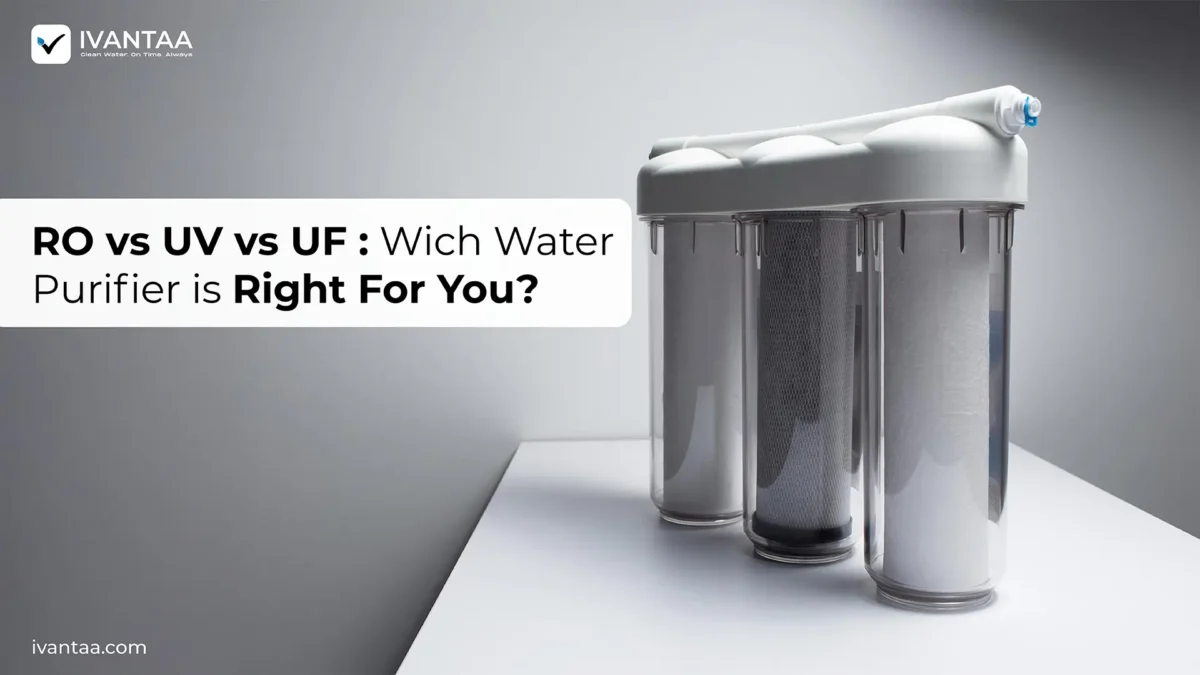
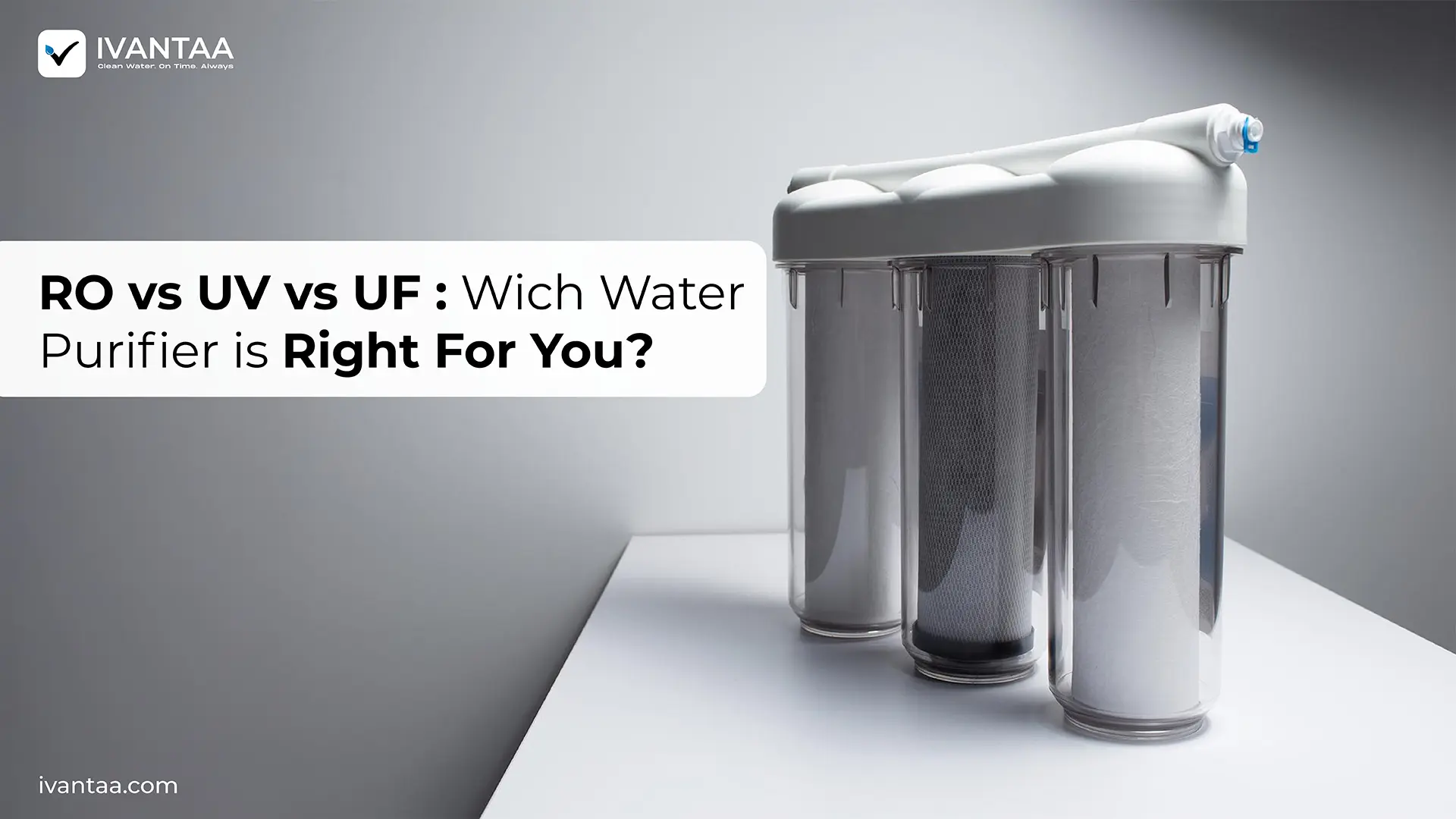
RO vs UV vs UF: Which Water Purifier Is Right for You?

Clean drinking water is no longer something we can take lightly. With rising pollution levels, changing water sources, and inconsistent municipal supply,

RO vs UV vs UF: Which Water Purifier Is Right for You?

Clean drinking water is no longer something we can take lightly. With rising pollution levels, changing water sources, and inconsistent municipal supply, choosing the right purifier has become a serious household decision. If you have been comparing models and feeling confused about the RO vs UV vs UF water purifier debate, you are not alone.

Many of us simply search for the best water purifier for drinking water and end up overwhelmed with technical jargon. Let us simplify everything so you can confidently decide what works for your home or business.

Why Choosing the Right Water Purifier Matters

Water quality varies drastically depending on your city, building pipeline, and water source. Some homes receive borewell water with high TDS. Others rely on municipal water that may contain microbial contamination.

According to the World Health Organization, contaminated drinking water contributes to waterborne diseases affecting millions globally.

This makes drinking water safety a daily priority. The right water purifier for home use does more than improve taste. It protects your family from long-term health risks caused by bacteria, heavy metals, and chemical contaminants.

Before deciding which water purifier is best, you must first understand how each technology works.

Understanding the Types of Water Purifiers

There are three main types of water purifiers used in Indian households and commercial spaces.

1. RO Purifier

RO stands for Reverse Osmosis. This technology uses a semi-permeable membrane to remove dissolved salts, heavy metals like lead and arsenic, fluoride, and other chemical contaminants.

RO is ideal for water with high TDS levels. It improves taste and reduces hardness significantly.

2. UV Purifier

UV purification uses ultraviolet light to kill bacteria and viruses. It is effective against microorganisms but does not remove dissolved solids or chemicals.

UV systems are suitable where water has low TDS but may contain biological contamination.

3. UF Purifier

UF stands for Ultrafiltration. It uses a hollow fiber membrane to remove bacteria, cysts, and suspended particles. It does not remove dissolved salts or heavy metals.

Some common UF water purifier benefits include low maintenance, no electricity requirement in gravity models, and effective filtration of visible impurities.

Understanding these types of water purifiers helps you compare realistically instead of choosing based on brand popularity.

RO vs UV vs UF – Key Differences at a Glance

Feature

RO Purifier

UV Purifier

UF Purifier

Removes Dissolved Salts (TDS)

Yes

No

No

Removes Heavy Metals (Lead, Arsenic, etc.)

Yes

No

No

Removes Chemicals

Yes

No

No

Removes Bacteria & Viruses

Yes (with membrane + often UV support)

Yes

Yes (bacteria, some microbes)

Removes Suspended Particles

Yes

No

Yes

Suitable for High TDS Borewell Water

Yes

No

No

Suitable for Low TDS Municipal Water

Yes

Yes

Yes

Electricity Required

Yes

Yes

Not always (gravity UF available)

Ideal For

Chemically contaminated or hard water

Microbially contaminated but low TDS water

Low TDS water with visible impurities

Which Water Purifier Is Right for You?

This is where it becomes personal.

Imagine a family living in Delhi NCR receiving borewell water with TDS of 700 ppm. They install a UV purifier, thinking it will be enough. While bacteria may be neutralized, the high dissolved solids remain. The water tastes salty, and scale builds up in appliances.

After switching to an RO purifier vs UV purifier setup, TDS reduces to safe levels, taste improves, and scaling decreases. The change is noticeable within weeks.

On the other hand, consider a household receiving treated municipal water with TDS around 150 ppm. Installing a high-capacity RO system might unnecessarily remove essential minerals and waste water. In this case, UV or UF could be sufficient.

If you are still wondering which water purifier is best, the answer depends on three things:

  • Your water source
  • TDS level
  • Type of contamination present

For most urban homes with unpredictable water quality, RO combined with UV offers balanced protection.

Common Myths About RO, UV, and UF Purifiers

Let us clear up a few misconceptions.

Myth 1: RO water removes all healthy minerals

Modern RO systems come with mineral cartridges that reintroduce essential minerals in balanced amounts.

Myth 2: UV is enough for all water sources

UV does not remove dissolved salts or chemicals. It only addresses microbial contamination.

Myth 3: UF works the same as RO

UF membranes are larger and cannot filter dissolved impurities.

The  UV vs UF vs RO water purifier debate often gets simplified into brand marketing claims. In reality, suitability depends entirely on water quality.

Factors to Consider Before Choosing a Water Purifier

Before purchasing a water purifier for home or commercial use, evaluate the following:

1. Check TDS Level

If TDS is above 300 ppm, RO is generally recommended.

2. Identify Contamination Type

Is the issue bacterial, chemical, or both?

3. Water Source

Borewell water usually requires RO. Municipal water may require UV or UF.

4. Budget and Maintenance

RO systems may require periodic membrane replacement. UV and UF have relatively lower maintenance costs.

5. Household Size

Choose storage capacity based on daily water consumption.

Making a decision without these checks often leads to overspending or underprotection.

Conclusion

Choosing between RO, UV, and UF is not about picking the most expensive model. It is about matching technology with your water quality.

The RO vs UV vs UF water purifier discussion becomes simple once you understand what each system removes. RO handles dissolved solids and heavy metals. UV handles bacteria and viruses. UF handles suspended particles and microbes.

If your water quality is uncertain or TDS fluctuates frequently, an RO-based system with additional UV protection is often the safest long-term choice.

Safe drinking water is not just about clarity. It is about invisible protection.

Safe drinking water is not just about clarity. It is about invisible protection.

Ready to Choose the Right Purifier?

Still unsure which purifier fits your home?

Get your water tested and explore purification solutions designed specifically for your area. Whether you need RO, UV, or UF technology, choosing the right system today can protect your family for years to come.

Explore Ivantaa’s reliable water purification solutions and rental plans designed for modern homes. Make every glass of water not just clear, but truly safe.

FAQs

How long does water filter installation take?

Typically, the time required to install a water filter will range from 30 to 45 minutes. If the installation is taking longer than this time, then there is usually an issue with the installation being done correctly.

Yes, installing a water filter by yourself is possible if you are knowledgeable about the basics of plumbing. However, a lack of knowledge may lead to small mistakes being made that result in leaks and preventable loss of time.

If your tap water runs slowly, it is an indication that your water pressure is too low for an RO purifier. It requires a constant flow of water at a sufficient pressure in order to operate correctly.

The best location to install your water purifier in your home is near the kitchen’s water line, drain, and power outlet access; convenience takes precedence over concealment.

After the water purifier has been installed, pre-filters must be replaced every six to twelve months. If the pre-filters are replaced regularly on time, this will extend the longevity of the RO membrane.
How to Install a RO Water Filter at Home

Safe drinking water is something every household needs every day. When water is not properly purified, it affects health over time.

How to Install a RO Water Filter at Home

Safe drinking water is something every household needs every day. When water is not properly purified, it affects health over time. A water purifier helps remove impurities, but it works correctly only when it is set up the right way at home.

To maintain the RO water purifier installed in your home, knowing how to install the filter is crucial. A poorly installed water purifier, with loose connections, inconsistent water flow, and incorrect placement, leads to a poorly working water filter.

This article serves as a water filter installation guide that explains how to install a purifier correctly at home without confusion.

How to Check Your Home Water Supply Before Installation

Before water filter installation, you must know what source of water you are getting for your home.

  • Municipal water – typically, this water has a consistent water pressure and low salt content.
  • Borewell water – this water contains high dissolved impurities and hardness, and typically has low water pressure.
  • Tanker water – the quality of tanker water often contains visible impurities and varies regularly.

Knowing the above information will help you install a water filter aligned with your current water source.

What Are All the Tools and Components You Need

It’s essential to gather all tools and parts before starting the water purifier filter installation process. The following items are required for this installation:

  • Adjustable wrench for tightening fittings.
  • Drill and wall anchors for securing the water purifier to the wall.
  • Teflon tape (for sealing pipe joints to prevent water leakage).
  • Inlet valve and food-grade pipe (to control the flow of water into the water purifier and the delivery of purified water to your kitchen faucet).
  • RO + UV unit with storage tank (to filter and store purified drinking water).

Each component has a specific function; the inlet valve controls the flow of water into the purifier, the food-grade pipe is used to safely carry water to and from your home, and the multi-stage filters are responsible for filtering the water.

Poorly installed or missing parts could result in leaks at the connections or slow water flow from your kitchen faucet.

Selecting the Correct Installation Location

When possible, place the water filtration system as close to the water source as possible to provide a continuous supply of water during water filter installation. If installed as a wall-mounted unit, ensure that a strong mounting surface supports the weight of a full storage tank.

The power outlet should be located near the water filtration system so that the ultraviolet light will illuminate when you pour water from the storage tank. Finally, ensure that the slope of the drain pipe allows wastewater to drain away properly.

Step-by-Step Installation Process for an RO plus UV Water Filter

There are many different ways to install a RO + UV water filter, but this is the typical order in which installations are performed in residential homes:

  1. Turn off the main water supply.
  2. Attach the inlet valve to the cold water line.
  3. Attach the sediment filter to the inlet valve.
  4. Securely mount the purifier to the wall.
  5. Attach internal pipes as marked for water flow direction.
  6. Connect the drain pipe to the sink outlet.
  7. Connect the storage tank to the tap.
  8. Plug the purifier into a safe electric socket.

By completing the installation in this manner, you will have a good flow of water through the entire ro water purifier installation process, and you’ll avoid issues thereafter.

Initial Flushing, Testing, and Calibration

After your water purifier is installed, flush your unit for approximately thirty minutes, then discard the contents of the first tank. The purpose of this process is to remove any remaining fine carbon particles from inside your filter, and to also remove any cleaning agents or residues that may be present.

Make sure to check every joint in your installation for signs of leaking and ensure a steady flow of water. If your unit provides you with water quality readings, check that your readings are lower after being purified. Finally, make sure that the UV indicator is lit when water is being dispensed.

Electrical Safety and Power Management

Electricity is essential to the safe functioning of an RO UV water purifier. Use a grounded connection location and do not connect any electrical appliance that uses a high amount of electricity, like a microwave or a refrigerator, on the same circuit as the water purifier, because these could cause damage.

How to Avoid Common Installation Problems

Many issues arise from the failure to adhere to standard water purifier installation tips. For instance, if you don’t check the water pressure prior to installing, you will likely have low output.

Drainage plate location errors can cause backflow issues, so you should flush your system. If connections are loose, this can lead to leaks that could eventually go unnoticed.

Why Some Homes Choose RO Water Purifier Rentals

Many Indian households prefer RO UV water purifier rentals because they eliminate the troubles associated with maintenance. With rental services, customers don’t have to do any installation, service, or filter replacements by themselves. The monthly subscription cost covers everything, from installation to filter replacement to servicing.

Ivantaa Rentals provides RO + UV water purifier services that come with free installation, free servicing, and free regular filter replacements. You only need to pay a fixed, affordable monthly cost, and everything is automatically covered.

It’s ideal for households that want to have drinkable water at all times and do not wish to be bothered with the various issues involved with setting up the water purifier, or feeling tied down to a long-term owning commitment.

Conclusion

Correct installation determines the performance and longevity of your water purifier. You should monitor your water for leaks, taste, and flow during the first week of operation to assist in identifying possible service issues before they happen.

As long as your purifier is properly installed, the process of regularly changing the filtration system will be less cumbersome and will give you an ongoing supply of safe and pure drinking water.

If you are looking for an easier way to get safe drinking water at home, contact us to explore our RO + UV water purifier rental demo options and choose a plan that fits your needs.

FAQs

How long does water filter installation take?

Typically, the time required to install a water filter will range from 30 to 45 minutes. If the installation is taking longer than this time, then there is usually an issue with the installation being done correctly.

Yes, installing a water filter by yourself is possible if you are knowledgeable about the basics of plumbing. However, a lack of knowledge may lead to small mistakes being made that result in leaks and preventable loss of time.

If your tap water runs slowly, it is an indication that your water pressure is too low for an RO purifier. It requires a constant flow of water at a sufficient pressure in order to operate correctly.

The best location to install your water purifier in your home is near the kitchen’s water line, drain, and power outlet access; convenience takes precedence over concealment.

After the water purifier has been installed, pre-filters must be replaced every six to twelve months. If the pre-filters are replaced regularly on time, this will extend the longevity of the RO membrane.
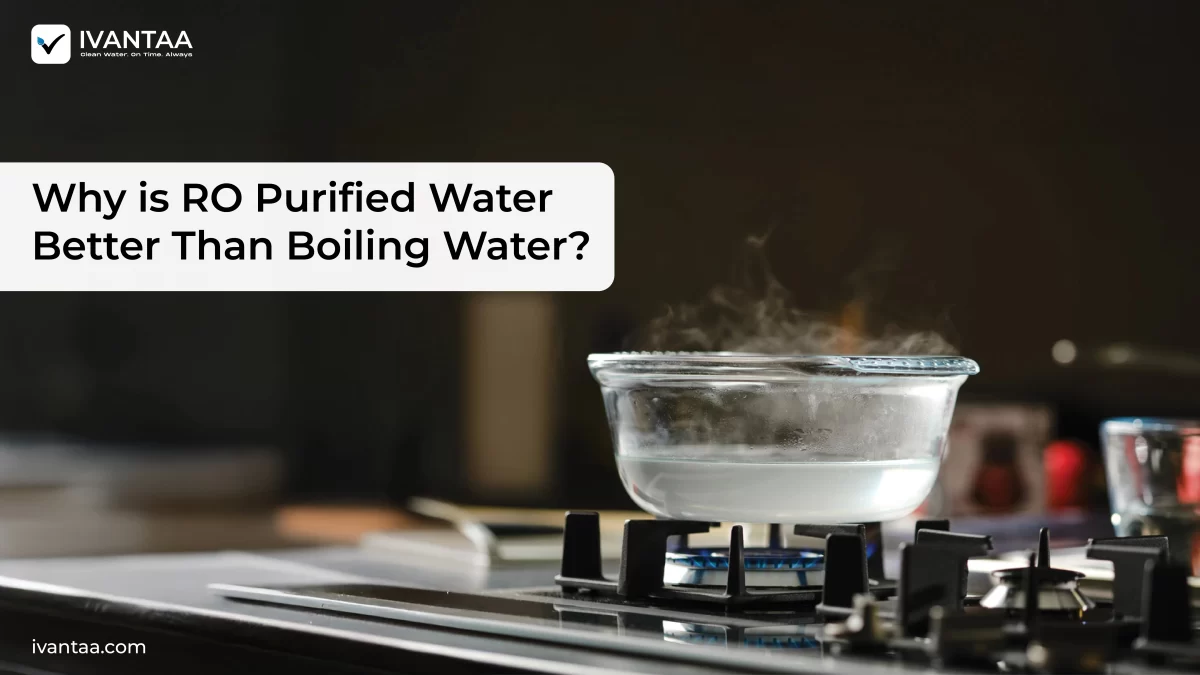
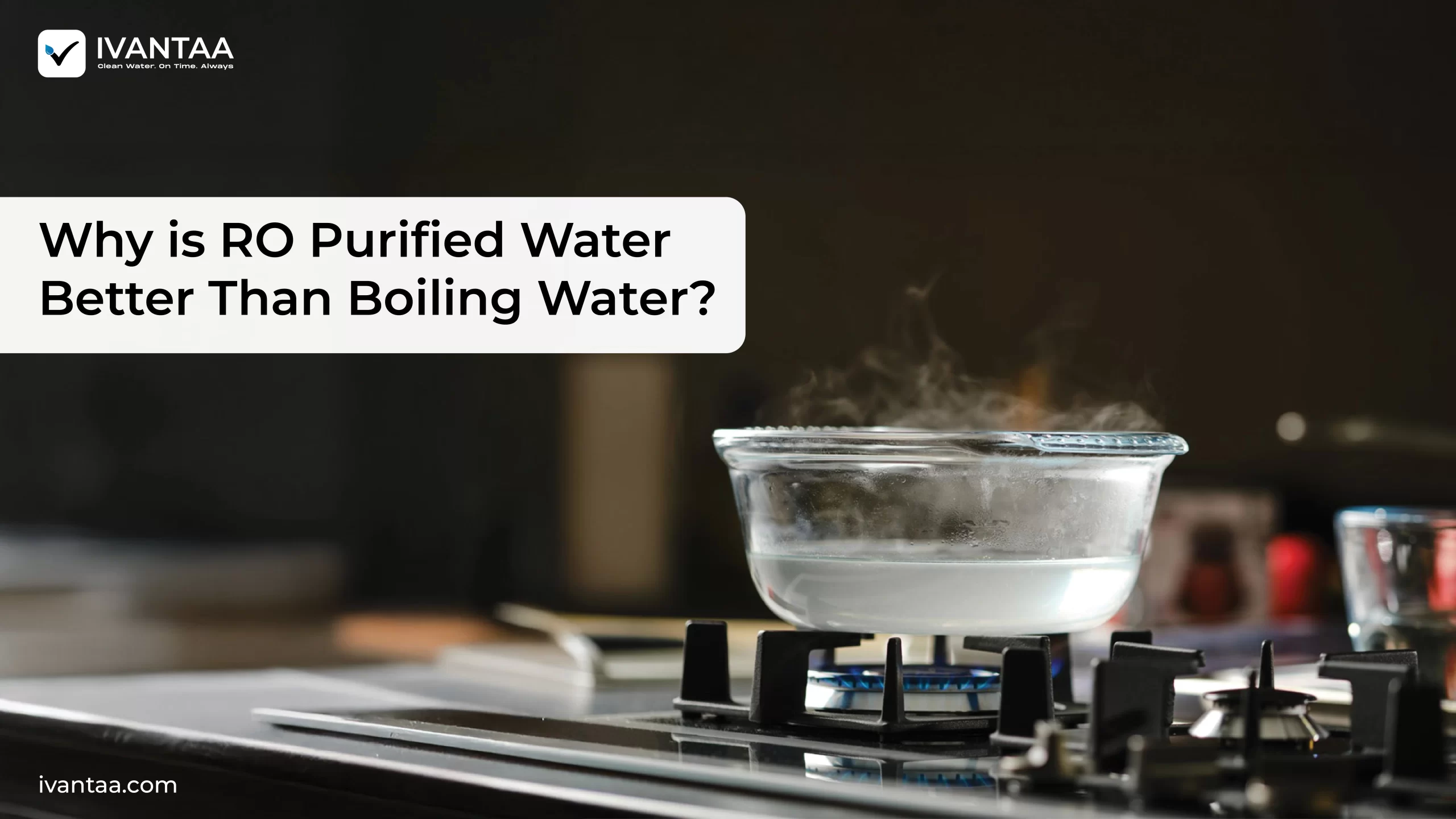
Why Is RO Purified Water Better Than Boiling Water?

Clean drinking water is something most of us assume we already have. Clean drinking water is something most of us assume we already have…

Why Is RO Purified Water Better Than Boiling Water?

Clean drinking water is something most of us assume we already have. Turn on the tap, boil the water if needed, and it should be safe. That belief worked decades ago, but today water contamination is more complex. Industrial waste, aging pipelines, dissolved salts, and heavy metals have changed the definition of safe drinking water.

If you have ever wondered whether boiling water is enough, or whether investing in a purifier actually makes sense, you are not alone. Many households still rely on boiling water for drinking, while others swear by modern purification systems.

What Is Boiled Water?

Boiling water is one of the oldest water purification methods known to us. The process is simple. Heat water to 100°C and keep it boiling for a few minutes. This kills most bacteria, viruses, and parasites that cause waterborne diseases.

Boiled water for drinking is effective in emergencies and for short-term use. It is often recommended during floods or when the water supply is temporarily unsafe.

However, boiling does not remove dissolved impurities. If your tap water contains excess salts, fluoride, nitrates, arsenic, or lead, boiling may actually increase their concentration because some water evaporates while contaminants remain.

According to the World Health Organization, boiling improves microbiological safety but does not remove chemical contaminants or heavy metals.

What Is RO Purified Water?

RO Purified Water is produced using Reverse Osmosis technology. In this process, water passes through a semi-permeable membrane that blocks dissolved solids, harmful chemicals, and heavy metals. Most modern systems also include UV or UF stages for microbial safety.

RO water benefits go beyond killing germs. It targets invisible contaminants that boiling simply cannot address. This makes it a preferred solution for long-term home use, especially in cities where water quality varies from area to area.

How Boiling and RO Purification Work

Let us simplify this.

Boiling water works by heat. Heat destroys microorganisms but leaves physical and chemical impurities untouched.

RO purification works by pressure. Water is forced through a membrane fine enough to stop dissolved salts, heavy metals, pesticides, and other contaminants. When paired with UV, it also ensures bacteria and viruses are neutralized.

This difference alone explains why water filter vs boiling water is not an equal comparison. One improves safety partially; the other addresses safety at multiple levels.

RO Purified Water vs Boiling Water: Key Differences

When comparing filtered water vs boiled water, these are the real-world differences that matter.

  • Impurity Removal
    Boiling kills germs but does not remove TDS, heavy metals, or chemicals. RO removes dissolved solids, arsenic, lead, fluoride, and industrial pollutants.
  • Taste and Odor
    Boiled water often tastes flat or metallic due to concentrated salts. RO water tastes lighter and cleaner because excess minerals and contaminants are removed.
  • Energy and Effort
    Boiling requires gas or electricity daily, time for cooling, and storage hygiene. RO systems work on demand with minimal effort.

  • Consistency
    Boiling quality depends on time and temperature. RO delivers consistent purification every time.

Example

A family living in an urban apartment where tap water TDS is around 600 ppm. They boil water daily, believing it is safe.

After boiling, bacteria may be gone, but dissolved salts, fluoride, and trace metals remain. Over time, the family notices scale buildup in utensils, bitterness in tea, and stomach discomfort.

When they switch to RO water for home use, TDS drops to a balanced level. Tea tastes better, digestion improves, and they no longer worry about what is invisible in their water.

This is not an extreme case. It is a common urban reality.

When Is Boiling Water Still Useful?

Boiling water still has its place. It is useful when:

  • There is a temporary contamination alert
  • You are traveling or camping
  • Power or purifier systems are unavailable
  • Water quality is already low in TDS and chemicals

For short-term drinking water safety, boiling is effective. But relying on it daily assumes your water has no chemical or heavy metal contamination, which is rarely verified.

Why RO Purified Water Is the Better Choice for Daily Use

Daily hydration is not about emergency survival. It is about long-term health.

RO water benefits include protection from heavy metals, controlled mineral balance, better taste, and consistent safety. Unlike boiling, RO purification adapts to modern water challenges.

The debate of RO Purified Water vs Boiling Water ultimately comes down to what risks you want to ignore. Microbes are only one part of water safety. Chemical contamination is the silent problem.

For families with children, elderly members, or anyone consuming water throughout the day, RO offers peace of mind that boiling cannot fully provide.

Understanding TDS and Why It Matters

TDS stands for Total Dissolved Solids. It includes salts, minerals, and metals dissolved in water.

Low TDS water tastes flat. Extremely high TDS water strains the kidneys and affects digestion. Safe drinking water usually falls between 50 to 300 ppm depending on source and health needs.

RO systems regulate TDS effectively, while boiling water does nothing to control it. This is a key reason why water filter vs boiling water comparisons consistently favor RO for daily use.

Conclusion

Safe drinking water today requires more than heat. While boiling water removes bacteria, it does not address the full spectrum of contaminants present in modern water supplies.

RO purification combines technology, consistency, and convenience. For households looking to rent an RO water purifier, this approach offers a practical way to meet today’s water quality challenges without long-term commitments. It aligns better with modern health expectations and sustainable living needs.

If your goal is truly safe drinking water, and not just habit-based safety, choosing to rent an RO water purifier becomes the smarter, more flexible choice.

Still boiling water every day and hoping it is enough?
Upgrade your daily hydration with an RO purification system designed for modern homes. Enjoy better taste, consistent safety, and zero daily effort.

Explore Ivantaa’s RO rental options today and experience what clean water should actually feel like.

FAQs

Can I use a spun filter and a sediment filter together in one system?

Yes, and it’s actually ideal. Spun filters catch heavy particles, while sediment filters handle finer dust.


If the flow reduces or your water tastes different, it’s time to replace the filter.


No. They remove only suspended particles, not dissolved solids.

Most areas use borewell water mixed with municipal supply, so a spun filter at the inlet and a sediment filter next is the most effective combination.

Spun Filter vs Sediment Filter: What’s the Difference and Which Do You Need?

If you’ve ever opened your RO purifier and seen that grimy first filter, you already know…

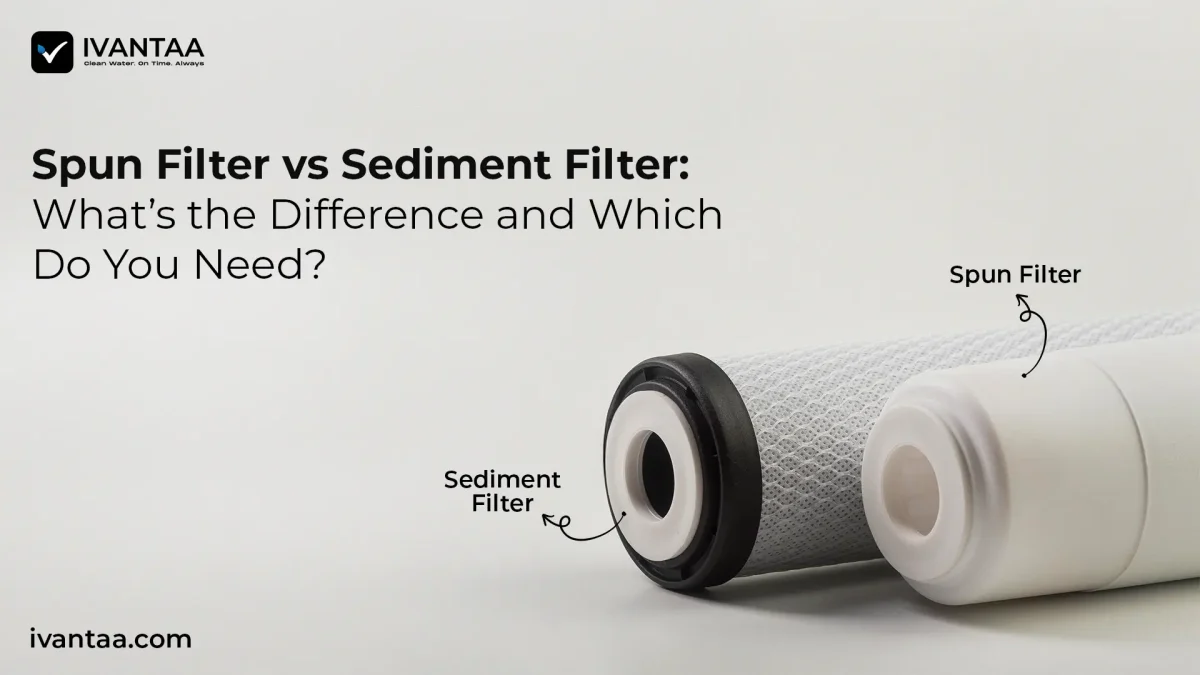
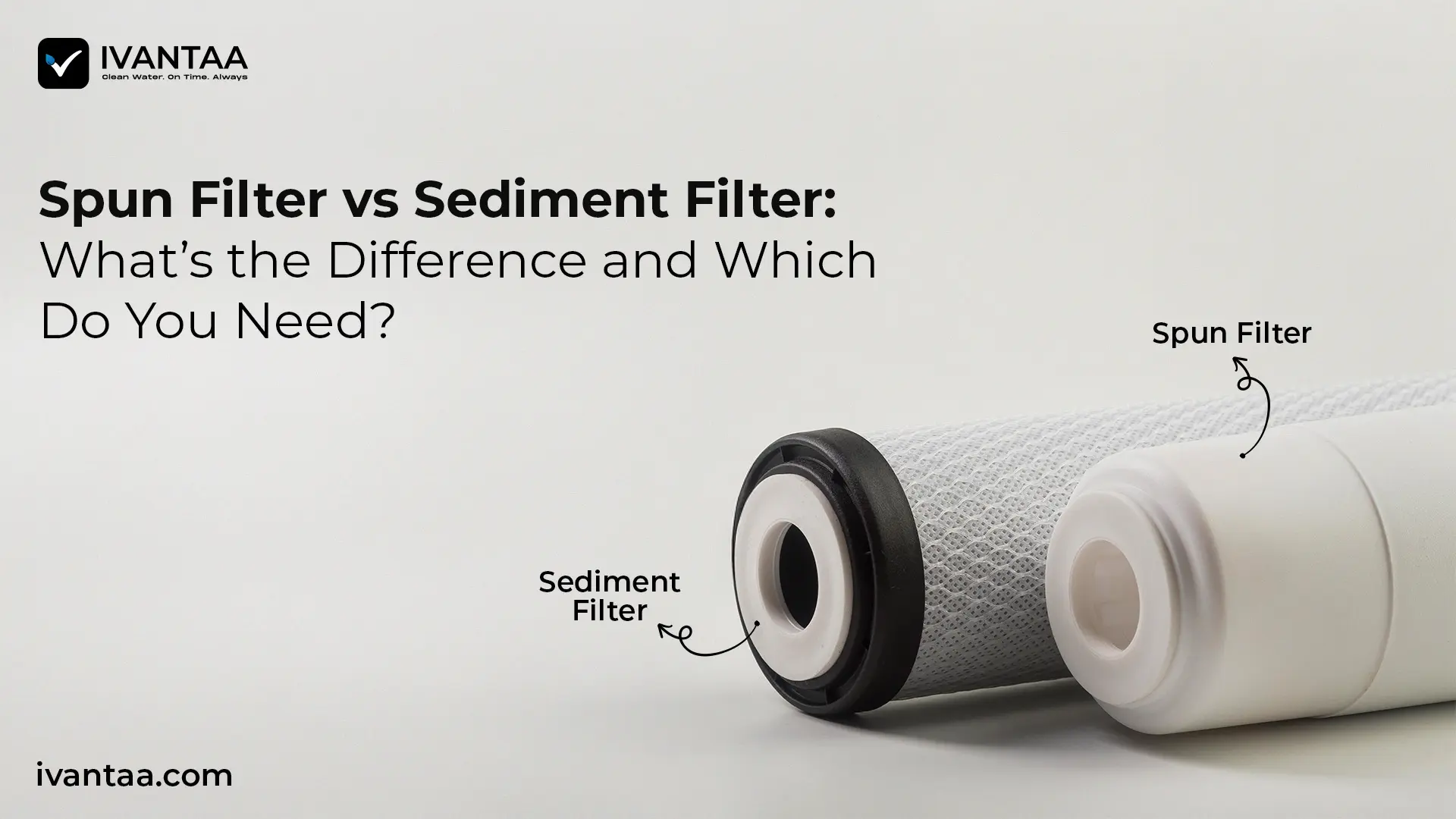
Spun filter and sediment filter comparison for RO water purifiers

Spun Filter vs Sediment Filter: What’s the Difference and Which Do You Need?

If you’ve ever opened your RO purifier and seen that grimy first filter, you already know how much dirt and debris your water carries before purification even begins. That first line of defence is usually a spun filter or a sediment filter, two terms most people use interchangeably.

But here’s the catch: they aren’t the same. And choosing the wrong one can bring down the performance of your RO system, increase maintenance costs, and even reduce filter life.

Why Pre-Filters Matter in Water Purification

Before water even touches the RO membrane, it passes through pre-filters. These filters remove dust, mud, rust flakes, sand, silt, and floating debris. Without them, the RO membrane would choke faster, your purifier would need more frequent maintenance, and the output water flow would drop drastically.

A study published on ScienceDirect found that suspended particles significantly reduce membrane efficiency and increase operating pressure requirements in RO systems.

That is exactly why the right type of pre-filtration is essential.

Understanding Spun Filters in Simple Terms

A spun filter (also called a melt-blown filter) is made by spinning polypropylene fibres into a thick, layered cylinder. As water passes through the layers, larger dirt particles get trapped on the outer surface while finer particles get caught deeper inside.

Quick Characteristics 

  • Depth filtration
  • Highly effective for turbid water
  • Affordable and widely available
  • Needs replacement every 2–3 months in most Indian cities

What is a spun filter used for? 

Mainly to catch:

  • mud
  • silt
  • rust flakes
  • larger sand particles

If your water looks muddy or leaves brownish residue in buckets or taps, a spun filter is the first thing your purifier needs.

Understanding Sediment Filters in Simple Terms

A sediment filter (often a pleated or mesh-style filter) works differently. Instead of depth filtration, it traps particles on the surface. These filters usually come with a fixed micron rating, like 5-micron or 10-micron, which determines the particle size they can block.

Quick Characteristics 

  • Surface filtration
  • Washable (in many cases)
  • Longer life compared to spun filters
  • Great for municipal water with minor dust or sand content

What is a sediment filter used for?

To remove:

  • fine dust
  • micro-debris
  • small sand particles
  • light sediments that escape basic pre-filtration

If your water looks clear but leaves faint white or brown specks on utensils, a sediment filter will handle that well

Major Differences Between Spun and Sediment Filters

Below is a clear comparison to help you understand the real difference between spun and sediment filters:

Feature

Spun Filter

Sediment Filter 

Filtration type

Depth

Surface

Particle capture

Larger + medium particles

Small fine sediments

Durability

Shorter life (2–3 months)

Longer life (up to 6 months)

Washability

No

Sometimes yes

Best for

Muddy, turbid water

Municipal supply with light dirt

Cost

Low

Slightly higher

Both filters remove impurities, but the difference between spun and sediment filter variations becomes crucial depending on your water supply. When you compare spun filter vs sediment filter, the best choice ultimately depends on the type of sediments present and how heavily your household water load affects the pre-filter stage.

Which Filter Works Best for Your Water Type?

Here’s a simple rule:

If your water is muddy or from a borewell
Go for a spun filter.
It handles a heavy dirt load far better.

If your water comes from a municipal supply
Choose a sediment filter.
It improves clarity and stops fine particles.

Example

Rahul from Ahmedabad installs an RO system. His apartment gets slightly yellowish borewell water that leaves visible dirt at the bottom of his water bucket.

If he uses only a sediment filter, it will choke within weeks. After switching to a spun filter designed for heavy turbidity, not only does the dirt reduce drastically before entering the RO, but the RO membrane life also improves. Rahul ends up spending less on maintenance and filter replacements throughout the year.

Choosing the Right Pre-Filter for Your RO System

Both filters have strengths. The real question is: what does your water need?

Consider these factors:

  • Source of water: borewell, tanker, municipal
  • TDS level
  • Visible dirt or colour
  • Filter choking frequency

Most RO companies recommend using a spun filter at the inlet for heavy load and a sediment filter next in line for finer purification. This combination ensures the RO membrane faces minimal stress.

If you’re looking for a complete setup without the hassle of installation and maintenance, opting for a water purifier for rent or an RO on rent is becoming increasingly popular in cities like Ahmedabad. Many rental providers like Ivantaa offer regular pre-filter replacements as part of the plan, so you never have to worry about clogged filters or surprise servicing charges.

Replacement and Maintenance Tips

  •  Replace spun filters every 60–90 days, depending on usage
  • Replace sediment filters every 4–6 months
  • Watch out for reduced water flow
  • Any unusual taste or odour indicates clogged filters
  • Ensure your RO technician checks pre-filters during every service
  • If you live in high-sediment areas, schedule pre-filter cleaning or replacement more frequently

Proper maintenance ensures your RO membrane lasts longer and your drinking water remains safe.

Conclusion

Both spun and sediment filters are essential in water purification, but their roles differ. If your water is visibly dirty or comes from borewell sources, a spun filter is your best choice. If your water is relatively clear but contains fine particles, a sediment filter offers better long-term performance.

For many households, using both in sequence provides the best protection.

And if you want the convenience of zero maintenance, scheduled servicing, and free filter replacements, choosing a water purifier rental plan is far more affordable and stress-free. Many residents in Ahmedabad now prefer RO on rent over buying, thanks to transparent pricing and fast support.

Ready to upgrade your drinking water experience?

Explore affordable, hassle-free RO on rent plans with free installation, regular filter changes, and no hidden fees. Pure water shouldn’t feel complicated; make it effortless today. Contact Ivantaa Today

FAQs

Can I use a spun filter and a sediment filter together in one system?

Yes, and it’s actually ideal. Spun filters catch heavy particles, while sediment filters handle finer dust.


If the flow reduces or your water tastes different, it’s time to replace the filter.


No. They remove only suspended particles, not dissolved solids.

Most areas use borewell water mixed with municipal supply, so a spun filter at the inlet and a sediment filter next is the most effective combination.

How Does Reverse Osmosis (RO) Work? A Simple Guide for Every Household

Clean drinking water is such a basic need, yet most homes today still struggle with…

RO water purifier showing membrane filtration and reverse osmosis process

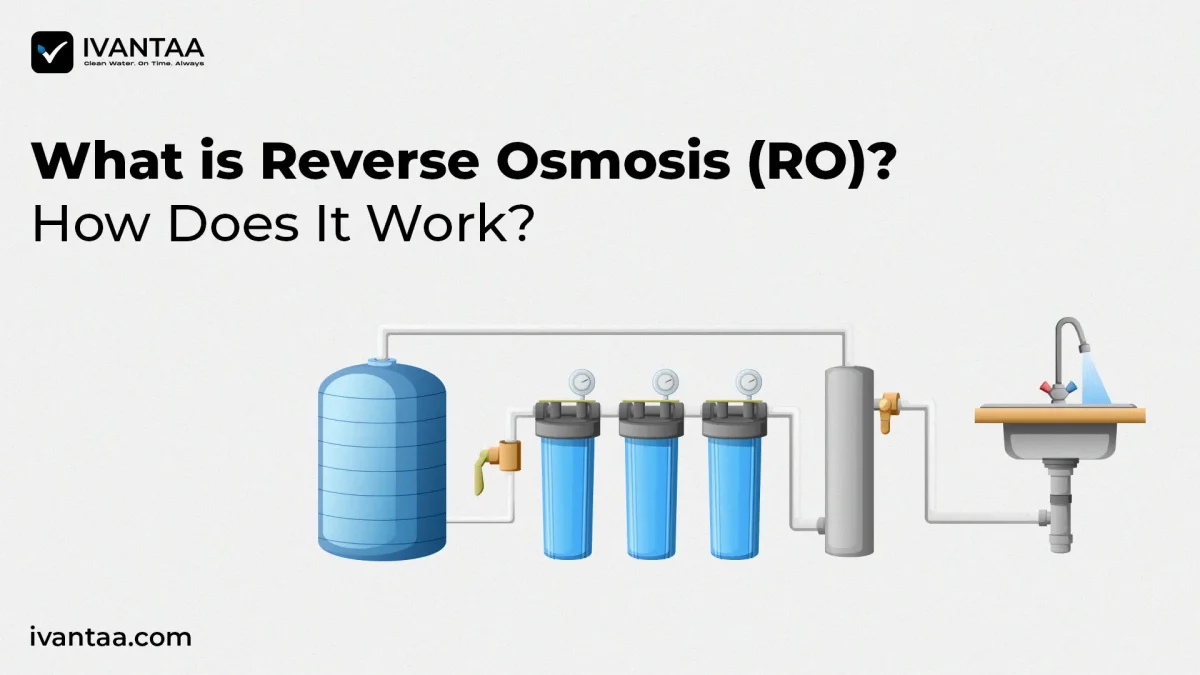
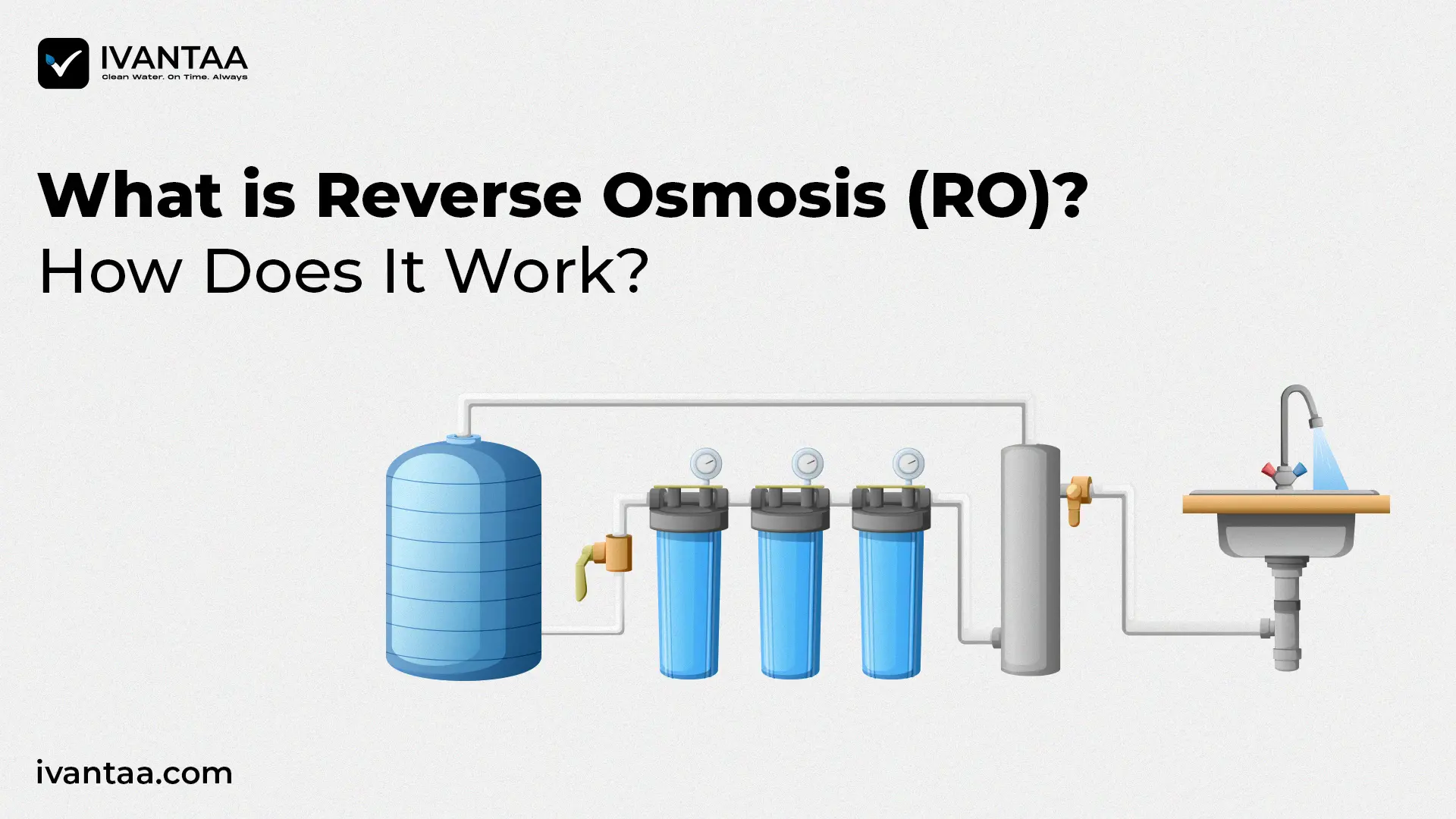
What is Reverse Osmosis (RO)? How Does It Work?

Clean drinking water is such a basic need, yet most homes today still struggle with unclear taste, rising TDS levels, or doubts about what’s really flowing from the tap. That’s exactly why RO purifiers have become so popular: they 

promise water that’s safer, clearer, and easier to trust. But what exactly is RO, and why does everyone swear by it? 

Understanding RO: What it is and How Does it Function?

When you hear “RO,” it stands for Reverse Osmosis. In simple terms, RO is a water-purification process that uses a special, semi-permeable membrane plus pressure to separate pure water molecules from contaminants.

Because of this efficient membrane filtration, RO is widely used to make drinking water safer, whether from taps, borewells, or municipal supplies.

What is RO Water? 

“RO water” refers to water that has undergone the reverse osmosis purification process. The result: water that’s largely free of dissolved solids, heavy metals, microbes, and many other kinds of contaminants.

In many households, this water is used for drinking, cooking, and sometimes even washing, especially where water quality from the source is questionable.

How does RO work (H3)

Reverse Osmosis (RO) works by pushing water through a semi-permeable membrane using pressure. This membrane acts like an ultra-fine sieve, allowing only pure water molecules to pass while blocking dissolved salts, heavy metals, chemicals, and microbes. Before reaching the membrane, the water usually goes through pre-filters that remove dust, chlorine, and larger impurities. As pressure drives the water through the membrane, clean water collects on one side, while the contaminants are flushed out as waste. The result is safer, clearer, better-tasting drinking water for your home.

What Does Reverse Osmosis (RO) Mean in Water Purification?

RO isn’t just a filter; it’s a membrane-based purification system. Unlike basic filters that mainly strain out larger particles, RO operates at a molecular level to remove dissolved contaminants.

Here’s how it works:

  • A semi-permeable membrane acts like a highly selective barrier. Water molecules (tiny and simple) can pass through. Solutes like salts, heavy metals, microbes, and many other impurities are blocked.
  • To make this happen, the system applies pressure to the incoming water. This pressure forces water through the membrane in the “reverse” direction compared to natural osmosis.

Because of this mechanism, RO can purify water to a level that most simple filters can’t match.

How the RO Membrane Filters Water

At the core of any RO purifier is the RO membrane, the heart of the process.

  • The membrane’s pores are extremely small (on the order of nanometres), small enough to block dissolved salts, heavy metals, micro-organisms, and many chemical contaminants.
  • When pressurized water hits the membrane, only “clean” water molecules pass through to the other side. Everything else, impurities, contaminants, dissolved solids, is left behind.
  • The “bad stuff” is flushed away as waste (often called “reject water” or “brine”), while the purified “permeate” water is collected for drinking or cooking.

In effect, the membrane acts like a microscopic sieve but far more advanced than ordinary filters.

The Role of Pressure in Reverse Osmosis

Pressure is not a footnote; it’s vital. The “reverse” in reverse osmosis literally means we’re pushing water the opposite way that natural osmosis would take it, and that requires energy.

  • For typical household water (fresh or mildly hard water), the system needs moderate pressure, usually within the capacity of normal water supply pressure in many homes.
  • Under pressure, water molecules are driven through the membrane; contaminants and dissolved solids are left behind. Clean water moves forward, and wastewater is flushed away.

Without proper pressure (or if pressure drops), RO’s effectiveness falls dramatically, so good RO systems ensure stable pressure and good pre-filtration.

Stages Involved in RO Water Purification

In practice, a household RO purifier involves multiple stages, not just the membrane. This multi-stage design helps both protect the membrane and improve water quality. A common sequence:

  1. Sediment Filtration (Pre-filter): removes visible particles, dirt, sand, rust, and dust that could clog or damage the membrane.
  2. Carbon (Pre-/Post-Carbon) Filtration: removes chlorine, some chemicals, volatile organic compounds (VOCs), and compounds that affect taste and odor. Also protects the membrane from chlorine damage.
  3. RO Membrane Filtration: the main filtration step where dissolved solids, heavy metals, microbes, and most contaminants are removed.
  4. Post-Filtration / Polishing (optional): after the membrane, water may pass through additional filters that ensure a clean taste, remove residual odor or chemicals, and improve overall water quality. Some systems even remineralize water, adding back beneficial minerals like calcium and magnesium for taste and health balance.

Because of these multiple stages, RO purification is more thorough than simple filters or carbon-only systems, giving you water that’s much closer to “pure” H₂O.

Why Households Prefer RO Purifiers

Given the complexity, why go for RO? Here are the common reasons many households choose RO:

  • High contaminant removal: RO water reduces heavy metals, dissolved salts, chemicals, microbes, and many impurities often much more effectively than regular filters.
  • Better taste and odor: Because chlorine, chemicals, and dissolved compounds are removed, the water tastes cleaner and doesn’t carry strange smells, making drinking and cooking water more pleasant.
  • Safe drinking water even from questionable sources: If your tap or borewell water has high dissolved solids or contaminants, RO gives peace of mind, something especially important in areas with industrial pollution, groundwater issues, or uncertain water quality.
  • Versatility: RO systems can work for water from municipal supply, borewell, or even treated water, making them a flexible solution for many households.

Because of this, RO purifiers have become widely popular in urban and semi-urban homes, especially where water quality may vary.

RO Water vs Regular Filtered Water – Comparison Table

Criteria

RO Water

Regular Filtered Water (Carbon / Sediment / Basic Purifiers)

Impurity Removal

Removes dissolved solids, heavy metals, chemicals, microbes, and fine contaminants

Removes chlorine, odor, some chemicals, and large particles; limited removal of dissolved impurities

Filtration Strength

High uses a semi-permeable membrane to eliminate microscopic contaminants

Moderate effective for taste and odor improvement but not deep purification

Mineral Content

Reduces or removes natural minerals like calcium & magnesium

Retains most natural minerals

Taste

Clean, neutral, sometimes “flat” due to low mineral content

More natural taste; mineral-balanced

Best For

Areas with hard water, high TDS, heavy metals, unreliable water quality

Areas with relatively clean municipal water

Safety Level

Very high suitable for poor or unpredictable water quality

Good for basic purification when water quality is already decent

Operating Method

Reverse Osmosis + often UV/UF for added safety

Mechanical filtration (sediment) + chemical adsorption (carbon)

Maintenance Need

Requires regular membrane & filter changes

Lower maintenance; mainly filter replacements

Cost

Higher (or low with rental plans) due to advanced tech

Lower, budget-friendly

Simple Maintenance Tips for RO Systems

If you install an RO system at home, maintaining it properly helps ensure it stays effective and safe. Here are a few practical tips:

  • Change pre-filters and carbon filters regularly. These protect the membrane if they’re clogged or saturated; membrane life drops, and performance suffers.
  • Monitor water pressure. RO needs a stable enough pressure to push water through the membrane; low pressure reduces purification efficiency.
  • Use a “remineralizer” or mineral cartridge (optional but useful). This helps add back essential minerals removed during filtration, improving taste and health balance.
  • Be mindful of wastewater (reject water). Many RO systems discard some water as waste; you can reuse that water for non-drinking purposes like cleaning or gardening, especially valuable in water-scarce places.
  • Periodic servicing and membrane replacement. Over time, membranes can wear or get fouled (scaling, deposits). Proper servicing ensures long-term performance.

If you’re renting a purifier or using a water purifier on rent make sure the provider offers regular maintenance and filter replacement. This helps keep water safe without you having to worry about technical upkeep.

Conclusion

Reverse osmosis offers a scientifically sound, highly effective way to purify water far beyond what regular filters can achieve. By using a semi-permeable membrane under pressure, RO removes dissolved salts, heavy metals, microbes, and many contaminants, giving households clean, safe drinking water even if the source quality is questionable.

At the same time, because RO also strips out natural minerals, it’s worth considering a system with remineralization or ensuring you get minerals from other dietary sources.

For many families, especially in areas with hard water or uncertain supply quality, RO remains one of the most reliable ways to ensure water safety, taste, and long-term health.

FAQs

How much time does RO take to purify water?

RO purification is continuous: as long as water flows through the system under adequate pressure, purified water is produced. The time per litre depends on water pressure and system design, but for standard household units, it’s typically just a few minutes.

Yes, it’s generally safe, but because RO removes minerals, it’s advisable to ensure you get adequate minerals from your diet or a remineralizing filter.

You can replace pre-filters or carbon filters if you’re comfortable, but for membrane replacement or deep servicing, a professional or your purifier rental/service provider is recommended.

Boiling can kill any residual microbes (though RO already removes most); it doesn’t restore minerals removed by RO. For better taste or mineral balance, a remineralizing filter is more effective.

Common issues include membrane fouling or scaling (due to the buildup of minerals/salts), pressure drops, filter clogs, and excessive wastewater. Regular maintenance helps prevent these.

How to Know When to Replace Your Water Purifier Filter?

You bought your RO water purifier to make sure your family drinks water that’s clean, healthy, and safe…

Water purifier filter being replaced for clean and safe drinking water

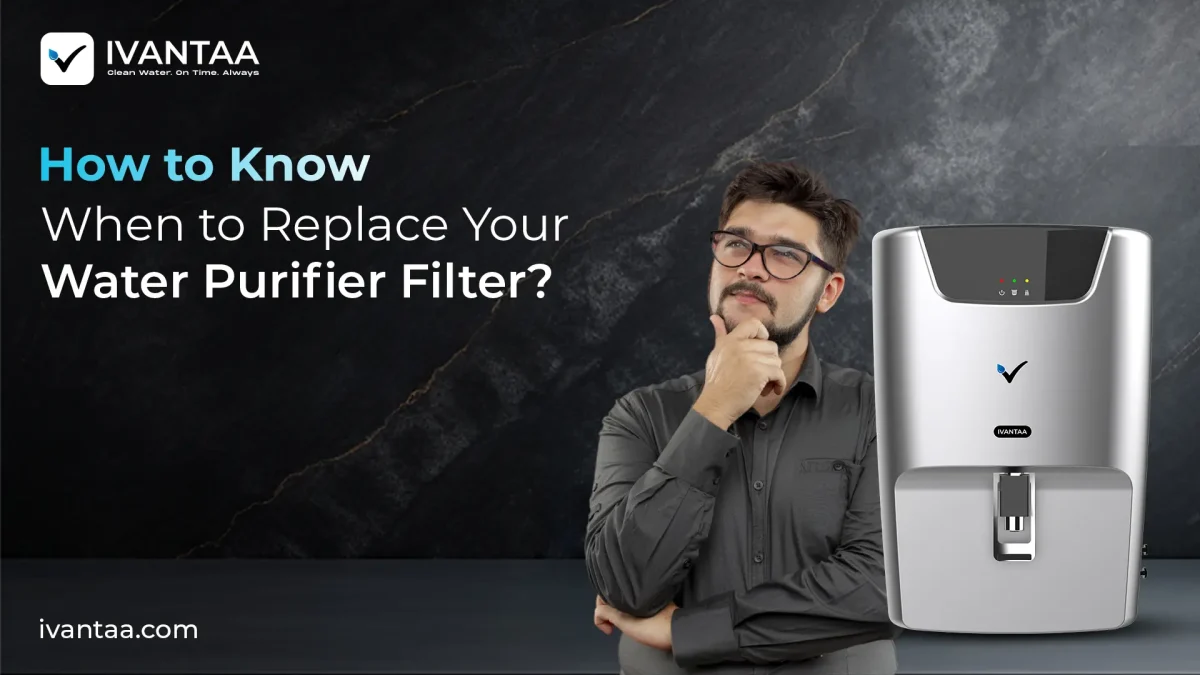
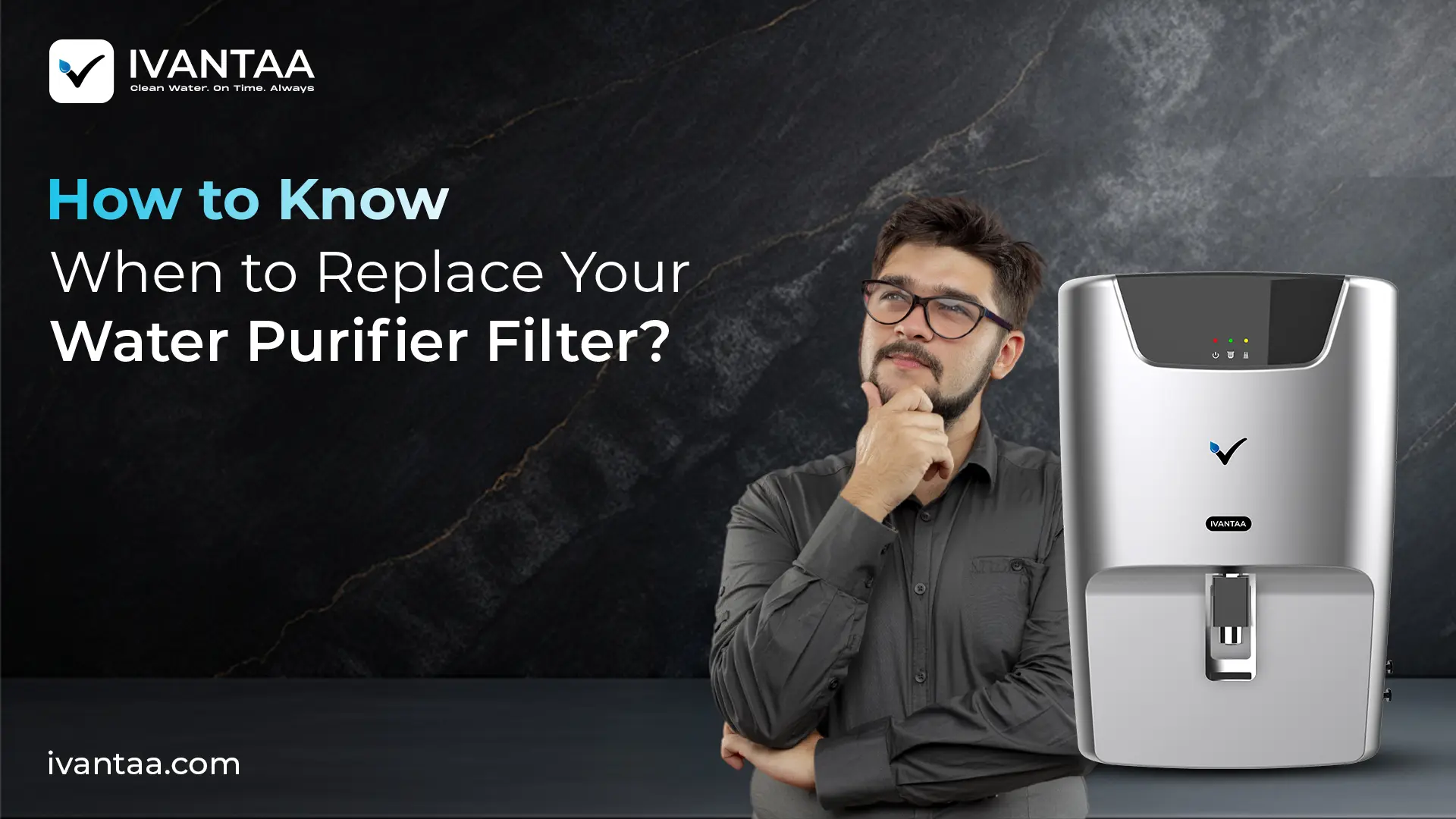
How to Know When to Replace Your Water Purifier Filter?

You bought your RO water purifier to make sure your family drinks water that’s clean, healthy, and safe. But even the best purifier can’t do its job forever without a little care. Inside your system, filters quietly work day and night to remove dirt, chemicals, and invisible impurities. Over time, they get clogged or worn out, affecting both water quality and your purifier’s performance.

Knowing when to replace your water purifier filter isn’t just about maintenance; it’s about protecting your loved ones from unsafe water and ensuring your investment continues to perform at its best. And if you prefer a worry-free setup where filter changes are handled for you, choosing a rented RO water purifier can make ongoing maintenance much simpler.

Why Regular Filter Replacement Matters

Think of your water purifier filter as the heart of your RO system. Just like the heart pumps blood through the body, filters keep the water flowing clean and pure.

When filters are neglected, the system can’t effectively remove contaminants. As a result, impurities like chlorine, heavy metals, and microbes may slip through, putting your health at risk.

For people living in Ahmedabad, where water quality often varies due to hard water or high TDS levels, timely water purifier filter replacement is even more important. Regular maintenance ensures every glass of water is fresh, pure, and safe just as your purifier promised.

Signs Your Water Purifier Filter Needs Replacing

You don’t always need a technician to tell when it’s time for a change. Your purifier gives subtle signals that the filter is struggling:

  1. Bad taste in RO water – If your purified water starts tasting metallic, salty, or just “off,” it’s a major sign your filters aren’t working efficiently anymore.
  2. Low water flow in the purifier – A dirty or clogged RO filter reduces water pressure. If you’re waiting longer than usual to fill your bottle, your filters might be choking the flow.
  3. TDS increases after RO – If your TDS (Total Dissolved Solids) level starts rising even after filtration, it means the RO membrane isn’t filtering properly.
  4. Unusual odor or cloudiness – Clean water should be clear and odor-free. Any change in smell or color is a warning sign.
  5. Filter change indicator – Many advanced RO + UV systems have built-in indicators. Don’t ignore the alert, it’s there for your safety.

Even if none of these symptoms are obvious, it’s best to follow your purifier’s maintenance schedule. Filters wear out gradually; catching the signs early keeps your water healthy and your purifier efficient.

How Often Should You Change Each Filter Type?

Different filters play different roles in your water purifier, and each has its own lifespan. Here’s a general guideline for how often to change them:

Filter Type

Function

Recommended Change Time

Sediment Filter

Removes visible dirt, dust, and sand particles

Every 6–12 months

Carbon Filter

Eliminates chlorine, chemicals, and odor

Every 6–12 months

RO Membrane

Filters dissolved salts, heavy metals, and microorganisms

Every 12–24 months

UV Lamp

Kills bacteria and viruses

Every 12 months

Keep in mind that these are average timelines. In cities like Ahmedabad, where water often contains higher TDS and sediments, filters may need replacement sooner. Regular servicing helps maintain the perfect balance between purity and performance.

Factors That Shorten Filter Life in Ahmedabad

Ahmedabad’s water composition and climate can impact how long your purifier filters last. If you’re evaluating whether buying or renting makes long-term sense, you may also find our guide on Why Renting a Water Purifier Is Smarter Than Buying One helpful before deciding.

Here’s why filters tend to expire faster in the city:

  1. High TDS levels: Groundwater in several areas of Ahmedabad contains dissolved salts and minerals, which put extra strain on RO membranes.
  2. Hard water: More calcium and magnesium mean faster sediment buildup, leading to clogged filters.
  3. Frequent power fluctuations: These can interrupt purifier operations, especially for UV systems.
  4. Heavy usage: Larger families or office setups using the purifier continuously will naturally wear out filters faster.

That’s why renting a water purifier in Ahmedabad through trusted services like Ivantaa can be a smart choice. Rental plans often include free and timely filter replacements, ensuring consistent purity without additional cost or worry.

What Happens If You Delay a Filter Replacement

Delaying filter replacement doesn’t just affect taste; it can compromise your health. Here’s what happens:

  • Contaminants build up: Old filters can no longer trap impurities effectively.
  • Bacterial growth: Moist, dirty filters can become breeding grounds for harmful microorganisms.
  • Purifier damage: A clogged or dirty RO filter forces the system to work harder, reducing its lifespan.
  • Poor water taste and odor: Impurities like chlorine or sulfur pass through, making the water unpleasant.

In short, procrastinating on maintenance can cost you both money and peace of mind. It’s far better to replace a filter on time than repair a damaged purifier later.

How to Replace the Filter or Get Service

If you own your water purifier, you can buy replacement filters based on your model’s specifications. However, replacement requires care; improper handling can affect system efficiency.

Follow these steps for a smooth process:

  1. Switch off the power supply and water inlet.
  2. Detach the housing carefully.
  3. Replace the old filter with the correct new one.
  4. Run the purifier for a few minutes to flush out air and carbon dust.

But if you’ve rented your purifier from Ivantaa, you don’t need to lift a finger. Our team handles everything from regular maintenance checks to free RO filter change service.

Every Ivantaa rental plan includes:

  • Scheduled maintenance visits
  • On-time filter replacements
  • 24/7 customer support
  • No hidden charges

This means you can enjoy safe, great-tasting water year-round without worrying about filter life or service costs.

Conclusion

Clean water is more than a convenience; it’s a daily necessity that impacts your health, energy, and peace of mind. Recognizing when to replace your water purifier filter helps ensure that every sip your family takes is safe, pure, and refreshing.

Whether you own a system or use an RO water purifier on rent, timely water purifier filter replacement is the simplest way to protect both your purifier and your well-being.

And if you’d rather not deal with filter changes or service calls at all, Ivantaa has you covered. With our reliable RO + UV water purifiers on rent in Ahmedabad, you’ll enjoy pure water without the burden of ownership maintenance included, always on time.

If you need guidance or support with your purifier, feel free to contact Ivantaa anytime.

FAQs

Can I reuse a water purifier filter if it still looks clean?

No. Even if it appears clean, microscopic contaminants clog the pores internally, reducing its filtering power. Always replace filters as per the schedule.

If you rent through Ivantaa, our trained technicians handle all filter replacements and routine checks free of charge.

No. With Ivantaa’s all-inclusive rental plans, you don’t pay anything extra for filter changes or servicing.

10 Things To Consider When Renting an RO Purifier in Ahmedabad

When it comes to ensuring safe drinking water, most households face a familiar question…

RO water purifier rental in Ahmedabad – Ivantaa flexible plans for pure drinking water

10 Things To Consider When Renting an RO Purifier in Ahmedabad

If you live in Ahmedabad, you know that water quality can vary drastically across the city. From high TDS levels to unwanted chemicals, ensuring safe and clean drinking water is essential for every household.

That’s where renting an RO purifier becomes a smart, budget-friendly choice. Instead of spending heavily on buying and maintaining a unit, many families now prefer getting a water purifier on rent in Ahmedabad, a flexible solution that combines affordability, convenience, and reliability.

Before you finalize your plan, it’s important to understand what to look for when you rent an RO water purifier. From checking hidden costs to verifying maintenance terms, a little research ensures you get the best RO water purifier on rent that suits your needs and local water conditions.

1. Analyze Your Water Quality in Ahmedabad

Before renting a water purifier, assess the quality of water in your area. Many regions in Ahmedabad have hard water or high Total Dissolved Solids (TDS). These impurities can impact not only the taste but also your health in the long run.

Choose a purifier that offers RO + UV purification. Reverse Osmosis (RO) removes dissolved salts, heavy metals, and impurities, while Ultraviolet (UV) technology kills harmful bacteria and viruses.

Ivantaa’s rental purifiers, for example, come equipped with advanced RO + UV filtration, ensuring safe, great-tasting water tailored for Ahmedabad’s conditions.

2. Check for Transparent Pricing and Hidden Charges

One of the biggest advantages of renting is avoiding heavy upfront investments. However, not all rental plans are transparent. Always confirm what’s included in your monthly plan. Installation, filter replacement, and maintenance should ideally be covered.

Beware of hidden charges of RO on Rent, such as service fees or unexpected filter replacement costs.

At Ivantaa, transparency is a core principle. Their rental plans include free installation, maintenance, and no hidden fees, so customers know exactly what they’re paying for.

3. Compare Rental Plans and Features

Every home has different needs, whether it’s a family of four or a large joint household. Compare RO purifier rental services based on:

  • Plan duration: Monthly, quarterly, or annual plans
  • Technology used: RO, UV, Alkaline, or TDS control
  • Maintenance frequency: How often filters are replaced
  • Deposit requirements: Refundable vs. non-refundable

Ivantaa offers flexible plans like monthly, quarterly, semi-annual, and annual options, all with a refundable deposit and comprehensive maintenance included.

4. Evaluate Service & Maintenance Support

Even the best RO systems need regular servicing. One of the top reasons people choose rental models is hassle-free upkeep. Ensure your provider offers free maintenance and quick service response in Ahmedabad and Gandhinagar.

Ivantaa’s rental customers enjoy regular support and scheduled maintenance visits, ensuring their purifier runs efficiently all year long.

This means no worrying about breakdowns or chasing technicians; your provider handles it all.

5. Assess Installation Process and Timelines

Quick installation is a key factor, especially if you’re moving into a new home or office. Check whether the company provides same-day or next-day installation. A professional setup ensures the purifier functions at its best without leakages or performance issues.

With Ivantaa, installations are usually completed within 24–48 hours, handled by trained technicians who provide a complete demo and water quality test post-installation.

6. Understand Relocation and Plan Flexibility

If you frequently relocate within Ahmedabad or Gandhinagar shift to a new apartment, ensure your rental plan allows relocation support. Many service providers offer reinstallation at your new address with minimal or no extra charges.

This flexibility ensures that renting remains cost-effective and convenient even when your living situation changes.

7. Compare Cost of Renting vs Buying an RO Water Purifier

The cost of RO in Ahmedabad is soaring high these days. Before purchasing it’s worth evaluating Renting RO vs buying RO. Buying involves a large upfront cost (₹12,000–₹25,000), plus recurring AMC (Annual Maintenance Contract) charges of ₹3,000–₹4,000 per year.

Renting, on the other hand, spreads out the expense with low monthly payments, zero AMC cost, and free servicing.

In the long run, if you move homes often or don’t want ownership hassles, renting RO purifier options makes far more sense.

8. Choose a Reliable Local Provider

Every home has different needs, whether it’s a family of four or a large joint household. Compare RO purifier rental services based on:

  • Plan duration: Monthly, quarterly, or annual plans
  • Technology used: RO, UV, Alkaline, or TDS control
  • Maintenance frequency: How often filters are replaced
  • Deposit requirements: Refundable vs. non-refundable

Ivantaa offers flexible plans like monthly, quarterly, semi-annual, and annual options, all with a refundable deposit and comprehensive maintenance included.

9. Check Purifier Model & Technology

Ahmedabad’s water often contains heavy metals, chlorine, and organic impurities. To ensure the best protection, pick a purifier equipped with multi-stage purification RO + UV + Alkaline + TDS control.

Ivantaa’s purifiers, like the Wavy Ora (White), come with RO + UV + Zinc + Alkaline + TDS, ensuring every drop is safe and healthy.

This is ideal for households with kids or elderly family members who need microbiologically safe drinking water.

10. Look for Eco-Friendly & Cost-Effective Solutions

Renting a purifier is not only affordable but also environmentally friendly. It reduces plastic bottle usage and ensures timely filter replacements, minimizing water wastage.

Choosing an eco-conscious provider like Ivantaa supports sustainability while ensuring cost savings, a win-win for your home and the planet.

Where to Get Reliable Water Purifiers on Rent in Ahmedabad

When it comes to RO purifier rental services, reliability, affordability, and quality are everything.

Ivantaa offers smart RO rental solutions across Ahmedabad, catering to homes, offices, and commercial spaces. Their plans include:

  • Free installation & maintenance
  • No hidden fees
  • Customer support
  • Flexible plan durations

With its advanced dual-purification systems and customer-first approach, Ivantaa makes clean water accessible, affordable, and worry-free for every household.

Conclusion

Renting an RO purifier in Ahmedabad isn’t just about convenience; it’s a smarter, more flexible way to ensure safe drinking water without financial stress.

From transparent pricing to quick maintenance and reliable service, choosing the right rental provider can make all the difference.

Whether you’re new to the city, shifting homes, or want a hassle-free experience, renting a water purifier in Ahmedabad through a trusted brand like Ivantaa guarantees peace of mind and pure hydration every single day.

Explore flexible RO rental plans today with Ivantaa and enjoy pure water on your terms.

Contact us today to find the perfect plan for your home or office!

FAQs About Renting Water Purifiers

How often should RO filters be changed in Ahmedabad’s water conditions?

Typically, every 6–12 months, depending on TDS levels. Ivantaa schedules timely filter replacements as part of your rental plan.

Yes, Ivantaa offers relocation support within city limits, ensuring hassle-free reinstallation.

Absolutely. Your deposit is fully refundable at the end of your rental term, provided the purifier is in good condition.

Why Renting a Water Purifier Is Smarter Than Buying One

When it comes to ensuring safe drinking water, most households face a familiar question…

Comparison of renting vs buying water purifier in Ahmedabad.

Why Renting a Water Purifier Is Smarter Than Buying One

When it comes to ensuring safe drinking water, most households face a familiar question: Should you buy a purifier or choose a rental water purifier plan? The upfront cost of purchasing a purifier may seem like a one-time investment, but the hidden expenses of maintenance, filter replacement, and AMC (Annual Maintenance Contracts) often make it less economical over time.

That’s where water purifier for rent plans come in. Renting allows you to enjoy pure, great-tasting water without worrying about installation hassles, servicing, or repair costs. At Ivantaa (linked to Home Page), we make hydration effortless with flexible plans for water purifiers on rent, ensuring convenience, affordability, and reliability for every home or office.

The Real Cost of Buying a Water Purifier

Buying a water purifier often seems like a long-term solution until the recurring costs start to add up. A standard RO + UV purifier can cost anywhere between ₹12,000 and ₹25,000, depending on capacity and brand.

Then come the installation charges, AMC fees, and filter replacement costs (usually ₹3,000 – ₹5,000 annually). These expenses can easily push your overall ownership cost beyond ₹30,000 within two years.

In contrast, when you choose a water purifier rent plan, you only pay a small monthly fee. You get free installation, zero-cost maintenance, and on-call support whenever required, no hidden charges, no long-term commitment.

Benefits of Renting a RO UV water purifier

Lower Monthly Costs
With a water purifier rental plan, you pay a fraction of the purchase price each month. For example, Ivantaa’s RO on rent plans start at just a few hundred rupees, giving you access to premium RO + UV purification without a heavy investment.

Maintenance Included
Say goodbye to annual service contracts and surprise repair bills. When you rent from Ivantaa, AMC costs are fully covered. Our technicians handle regular servicing and filter replacement at no additional charge, ensuring continuous, safe drinking water.

Flexibility of Plans
Life changes, and so should your plan. Ivantaa’s water purifier rentals come in flexible durations: monthly, quarterly, or yearly. Whether you’re a tenant, working professional, or a business with shifting needs, you can choose what fits your lifestyle.

Try Before You Buy
Not sure which model suits you best? Water purifier rentals let you test performance, taste, and service quality before making a long-term decision.

Explore our flexible Plans today.

RO vs UV Water Purifiers – Which Works Best on Rent?

Feature

RO Water Purifier

UV Water Purifier

Function

Uses Reverse Osmosis to remove dissolved solids, heavy metals, and chemicals

Uses Ultraviolet light to kill bacteria and viruses

Best For

Areas with high TDS or hard water

Areas with low TDS but microbial contamination

Water Taste

Improves taste and clarity

Retains natural minerals

Power Requirement

Moderate

Low

Ideal Use

Urban households and commercial setups

Homes with municipal water supply

Prefer to rent RO only? See our RO-only rental plans

For most Ahmedabad households where TDS levels range from 500 – 1200 mg/L, an RO + UV water purifier is the most effective choice. That’s why Ivantaa offers both RO and RO + UV water purifiers in our rental plans, giving you the flexibility to choose based on your local water quality and usage needs.

Renting vs Buying – Which Saves More with a water purifier rental?

Cost Factor

Buying a Purifier

Water Purifier for Rent

Upfront Cost

₹15,000 – ₹25,000

₹0 (installation included)

AMC/Servicing

₹3,000 – ₹5,000 per year

Included

Repairs/Parts

Paid separately

Included

Filter Replacement

₹1,500 – ₹3,000 annually

Included

Flexibility

Fixed ownership

Cancel or upgrade anytime

When you calculate the numbers, renting a purifier costs nearly 40–60% less in the first two years. And since most units require major servicing within 18–24 months, renting ensures you never deal with expensive breakdowns or downtime.

Why Ivantaa Is the Right Choice for Rental Water Purifiers

hydration. Serving Ahmedabad with pride, we combine cutting-edge purification with customer-first service.


Here’s what sets Ivantaa apart:

  • Reliable and Transparent – No hidden fees or surprise costs on our water purifier rentals.
  • Affordable Plans – Flexible water purifier for rent options for every home and office budget.
  • Quick Installation – Delivered and set up within 24–48 hours.
  • Zero-Maintenance Promise – Filter changes and servicing are on us.
  • Local Expertise – Dedicated team for rental water purifier in Ahmedabad support.


Whether you choose a short-term plan or an annual package, the Ivantaa water purifier on rent ensures you enjoy pure water without the burden of ownership.


Get in touch with our team today.

Conclusion

In today’s fast-moving world, a rental water purifier simply makes more sense than a full purchase. It’s cost-effective, flexible, and stress-free, giving you reliable access to clean drinking water without the hassle of maintenance or upfront costs.

So, instead of locking your money into a depreciating appliance, choose freedom and convenience with Ivantaa.

Ready to switch to water purifier rent? Explore our plans or contact us today!

FAQs About Renting Water Purifiers

Is renting a water purifier better than buying?

Yes. With a water purifier rent plan, you avoid high upfront costs, ongoing AMC charges, and repair hassles, making it the smarter choice for most users.

Opting for RO on rent gives you access to premium purification, zero-maintenance service, and affordable monthly plans ideal for homes with high TDS levels.

Absolutely. Ivantaa provides RO UV water purifiers across flexible rental plans, ensuring you get the right technology for your local water quality and consumption.

What Is the Cost of RO on Rent in Ahmedabad?

Ahmedabad’s growing population, shifting water sources, and varying TDS levels have made access…

Affordable RO on rent in Ahmedabad with Ivantaa water purifier plans.

What Is the Cost of RO on Rent in Ahmedabad?

Ahmedabad’s growing population, shifting water sources, and varying TDS levels have made access to safe drinking water more important than ever. Whether you live in Bopal, Navrangpura, or Satellite, chances are your tap water quality changes from one season to another. Instead of investing thousands upfront in a purifier, more families and offices are now turning to RO on rent in Ahmedabad, a wise choice that blends affordability and convenience.

With Ivantaa, getting pure water is effortless. As part of its Affordable RO on Rent Ivantaa service, you can enjoy high-performance RO + UV systems without worrying about maintenance, filter replacements, or hidden fees, no heavy installation charges, no ownership stress, just clean water delivered with care.

Average RO on Rent Cost in Ahmedabad

On average, the cost of RO on rent in Ahmedabad ranges between ₹600 and ₹800 per month, depending on the model and plan duration. That’s less than the price of a daily coffee, and far less than the annual cost of buying and maintaining a purifier.

Here’s a quick comparison to help you decide whether renting or buying suits you better:

Feature

Renting a Water Purifier

Buying a Water Purifier

Upfront Cost

₹0 – No purchase needed

₹10,000 – ₹25,000

Maintenance

Included in rent

₹2,000 – ₹3,000 per year

Flexibility

Cancel or upgrade anytime

One-time decision

Installation

Free

₹500 – ₹1,000

Ideal For

Tenants, students, offices

Homeowners

With Ivantaa’s transparent plans and pricing, what you see is what you pay, no extra filters, no service fees, no surprises.

Factors That Affect RO Rental Pricing

Every home’s needs are unique. The rental cost of an RO purifier varies based on several practical factors:

1. Type of Purifier 

The technology defines both performance and price.

  • RO Purifiers: Best for areas with high TDS or hard water.
  • UV Purifiers: Effective where microbial contamination is the issue.
  • RO + UV + Alkaline: Combines multi-stage purification with better taste and added minerals.

If you’re planning to rent RO water purifier units for daily family use, go for an RO + UV model, it offers balanced protection for Ahmedabad’s mixed water profiles.

2. Maintenance & AMC Charges

Many rental companies charge extra for servicing. Ivantaa doesn’t. All Annual Maintenance Contracts (AMCs) are part of your rental plan.

3. Location in Ahmedabad 

Service accessibility can slightly influence price. Central areas like Vastrapur, Paldi, and CG Road often get quicker installations, while outskirts such as Sanand, Chandkheda, and Naroda might have minimal logistical variations. Regardless, Ivantaa ensures every customer across the city gets equal attention.

Best Water Purifier on Rent in Ahmedabad – How to Choose?

Choosing the best water purifier on rent in Ahmedabad depends on your household, water quality, and lifestyle. Before finalising, consider:

  • Water Quality: Check your area’s TDS level. If it’s above 300 ppm, pick an RO + UV system.
  • Family Size: Basic to commercial based on the need.
  • Maintenance Needs: Ensure AMC and filter changes are covered.
  • Rental Tenure: Quarterly or annual plans often include discounts.
  •  Support Quality: Choose a provider with prompt response and verified service staff.

Ivantaa ticks all these boxes with same-day response times, free installation, and flexible plan durations.
Check out our best plans to find one that fits your family or office setup.

How the Ivantaa Rental Process Works

Many customers wonder what happens once they book their RO. Here’s a clear breakdown:

  1. Book Online or Call – Share your preferred plan and location.
  2. Technician Visit (within 24–48 hours) – Site assessment and installation.
  3. Start Drinking Pure Water – Filters are pre-tested and maintenance reminders are automated.
  4. Renew or Upgrade Anytime – Switch plans or cancel without penalties.

Each installation includes a small, refundable security deposit—fully returned when you end the rental.

Why Ivantaa Is the Most Affordable RO on Rent Option

When people search “Affordable RO on Rent Ivantaa,” they’re not just comparing prices, they’re choosing reliability, transparency, and care.

Here’s what sets Ivantaa water purifier on rent apart:

  • Free Installation & Filter Replacement – No technician fee, ever.
  • Advanced RO + UV + Alkaline Systems – Multi-layered purification for Ahmedabad’s diverse water sources.
  • Zero-Maintenance Promise – AMC included for peace of mind.
  • 24×7 Support Line – Quick resolution via call or WhatsApp.
  • Eco-Friendly Choice – Reduces plastic waste from bottled water.
  • Pan-Ahmedabad Coverage – From Gota to Maninagar, we serve every household.

A recent Statista study found that 42% of Indian urban families prefer renting appliances to avoid upfront costs and maintenance expenses (Statista, 2024). Ivantaa caters exactly to this trend of affordable quality with unmatched service.

Conclusion

Pure drinking water shouldn’t be expensive or complicated. With Ivantaa, you get affordable, flexible, and fully serviced RO on rent in Ahmedabad, installed within 48 hours and supported by experts who genuinely care about your health.

Whether you’re moving homes, setting up an office, or simply avoiding the burden of ownership, Ivantaa gives you the confidence of safe hydration without compromise.

Looking for the most affordable RO on rent in Ahmedabad?
Explore our Plans or Contact Us today to book your purifier and enjoy pure water from Day 1.

FAQs About RO on Rent in Ahmedabad

What is the cost of RO on rent in Ahmedabad?

The price starts at ₹419 per month and can go up to ₹800, depending on model and features. Installation, maintenance, and filter changes are all included in this pricing.

Absolutely. Renting saves upfront investment, covers all AMC costs, and lets you upgrade when needed, ideal for tenants and working professionals.

An RO + UV model is best for most households. It ensures pure, tasty water and requires minimal maintenance.

Yes. Ivantaa’s service network extends to Gandhinagar, Sanand, and other nearby areas, with the same service standards and quick turnaround.

A small refundable deposit applies to each plan. Trials are available during promotional periods, check current plans and pricing for offers.

RO + UV systems are the most cost-efficient in the long run because their filters last longer and need fewer replacements.

The Ultimate Guide to Choosing the Best RO Water Purifier on Rent in Ahmedabad

The Ultimate Guide to Choosing the Best RO Water Purifier on Rent in Ahmedabad

If you’re searching for a RO water purifier on rent in Ahmedabad, chances are you’re already dealing with water challenges at home or work. In many parts of Ahmedabad, tap water often has high TDS (total dissolved solids) levels due to borewell supply, which affects taste and safety. Gandhinagar residents face their own seasonal issues, such as microbial contamination during the monsoon.

Instead of investing heavily in buying a purifier and worrying about filter changes, servicing, or repairs, many families, students, and businesses are now turning to water purifier rentals. Renting gives you safe, clean water without the burden of ownership. This guide will help you understand how to choose the best RO water purifier rental that suits your lifestyle, budget, and local water conditions.

Why Choose an RO Water Purifier on Rent?

For many people in Ahmedabad and Gandhinagar, buying a water purifier outright feels like a heavy investment. Rental options are becoming increasingly popular because they remove the upfront burden while still giving you reliable access to safe drinking water.

Here’s why renting makes sense in real life:

  • No Heavy Upfront Cost: Buying an RO + UV purifier can run into thousands of rupees. With a rental, you only pay a small monthly fee: ideal for families moving into new housing societies around the SG Highway who are already managing multiple expenses.
  • Flexibility for Short Stays: Students studying at PDPU or professionals posted temporarily in Gandhinagar often prefer monthly or quarterly plans. This way, they can enjoy clean water without worrying about shifting or reselling the machine later.
  • Zero Maintenance Hassle: Regular filter changes and servicing are included in most rental plans. For busy working couples in areas like Prahladnagar, this means one less chore to manage.
  • Peace of Mind: With no extra costs for repairs or breakdowns, you enjoy fresh, safe water every day.

In short, choosing a RO water purifier on rent gives you the benefits of the best RO water purifier rental services without locking yourself into a long-term financial or service commitment.

Understanding RO + UV Technology

When it comes to choosing a water purifier, the technology inside matters just as much as the rental plan. In Ahmedabad and Gandhinagar, water often comes with challenges like high TDS (salty taste from borewell water) or microbial contamination during the monsoon. That’s why dual purification is so necessary.

Think of it this way:

  • RO (Reverse Osmosis) works like a super-fine sieve. It pushes water through a special membrane that traps dissolved salts, heavy metals (like fluoride and arsenic, often found in Ahmedabad groundwater), and chemical pollutants. What you get is cleaner, softer-tasting water.
  • UV (Ultraviolet) sterilization is like a safety lamp. It shines UV light on the water, killing invisible bacteria, viruses, and germs, problems that often arise in piped municipal water or during seasonal contamination in Gandhinagar.

When combined in an RO + UV water purifier, the two systems ensure your water is free from both chemical impurities and biological risks. This means every glass of water is safe for your family, no matter whether your supply comes from a borewell, municipal pipelines, or a mix of both.

Key Features to Look for in an RO Water Purifier Rental

When you choose a RO water purifier on rent, not every feature carries equal weight. To make decision-making easier, here are the top 3 must-have features you should look for, especially in Ahmedabad and Gandhinagar, where water quality varies:

1. UV Sterilization for Safety

This is non-negotiable. UV protection ensures that even if your municipal water gets contaminated during the monsoon, bacteria and viruses won’t reach your glass.

2. Adequate Storage Capacity

For families in Ahmedabad and Gandhinagar, a purifier with 7–10 litres of storage is the sweet spot. It ensures you won’t run out of safe water during power cuts or peak usage hours. Larger offices or PGs may need tanks up to 12 litres.

3. Maintenance Included in the Plan

The best water purifier rental plans in Ahmedabad always include regular filter changes (usually every 6–12 months) and technician visits. This saves both money and hassle, no surprise bills.

Other useful features to consider:

  • TDS Controller: Keeps the taste balanced in areas with hard borehole water.
  • Energy Efficiency: Reduces power usage, a plus for long-term renters.
  • Relocation Support: Helpful if you move flats or offices within the city.

By prioritising these features, you’ll not only get safe water but also ensure your rental experience is smooth and stress-free.

Comparing Models: Which RO Water Purifier Rental is Right for You?

There are multiple models available in the market, each catering to different needs:

  • Compact RO + UV Units: Perfect for small families or bachelors living in rented flats.
  • Medium-Capacity Models: Designed for households of 4–6 members or small offices.
  • Advanced Models with Added Features (like Alkaline or Mineral Booster): Ideal for health-conscious users or larger spaces like clinics, gyms, or restaurants.

When comparing, focus on:

  • Storage capacity
  • Purification technology
  • Rental price versus purchase cost
  • Maintenance coverage

This approach ensures you find the best RO water purifier rental for your lifestyle. If you’re unsure how to choose a water purifier on rent, start by noting your daily water consumption and budget.

How to Choose the Best Water Purifier Rental Plan in Ahmedabad

Once you’ve shortlisted the right model, the next step is picking a rental plan. In Ahmedabad and Gandhinagar, most providers offer:

  • Monthly Plans: Best for temporary stays or short-term rentals.
  • Quarterly/Semi-Annual Plans: More affordable than monthly if you plan to stay longer.
  • Annual Plans: Lowest cost per month; suitable for families settled in one place.

When comparing water purifier rental plans in Ahmedabad, consider:

  • Does the plan cover maintenance and filter changes?
  • Is there a refundable security deposit?
  • Are there hidden costs, like relocation or emergency repair charges?

By aligning your water needs with your budget, you can find a plan that saves money in the long run.

What to Expect from Your RO Water Purifier Rental Service

One of the significant advantages of choosing a rental is the service experience. With the best RO water purifier rental companies, here’s what you can typically expect:

  • Free Installation: A technician visits your home or office, sets up the purifier, and ensures it’s working correctly.
  • Regular Maintenance: Filter replacements and system check-ups are scheduled proactively.
  • 24/7 Customer Support: In case of breakdowns or water flow issues, help is just a call away.
  • No Extra Charges: The rental fee usually covers everything, so you don’t get surprise bills.

This all-inclusive service makes renting an attractive option for busy families, working professionals, and businesses alike.

Conclusion

Choosing a RO water purifier on rent in Ahmedabad (or Gandhinagar) is not just about saving money; it’s about convenience, safety, and flexibility. From understanding RO + UV technology to comparing models and selecting the right plan, the decision comes down to your water needs and budget.

If you want a smart, stress-free way to ensure safe drinking water every day, renting is one of the best options available.

Contact Ivantaa today to explore flexible RO water purifier on rent plans in Ahmedabad and Gandhinagar, and start enjoying pure, clean water without the hassle of ownership.

Frequently Asked Questions (FAQs)

Do I need to pay a deposit?

Yes, there is usually a Rs1500 refundable deposit. It’s returned once the unit is picked up in good condition.

Yes. We allow you to cancel with a short notice period, with no penalties.

Repairs and parts are covered under the rental plan. You don’t pay extra.*

If you move within Ahmedabad & Gandhinagar, we uninstall  and reinstall at your new address, free of charge.

Rent RO + UV Water Purifier: The Smart Choice for Your Home

Smart choice to rent RO water purifier with UV technology

Rent RO + UV Water Purifier: The Smart Choice for Your Home

Clean Water isn’t optional; it’s a daily need. Yet when it comes to ensuring safe drinking water at home, most families in Ahmedabad are stuck between two costly choices: buying an expensive purifier or relying on bottled water deliveries.

A growing number of households have started to rent RO + UV water purifiers instead of buying them outright. Why? Because renting solves the real challenges of ownership, high upfront costs, constant servicing, and unexpected repair bills, while still giving you peace of mind that every glass of water is safe.

Let’s look at why this shift is happening and whether renting could be the more intelligent choice for your home.

What is an RO + UV Water Purifier?

If you’ve ever wondered what all the technical jargon means, here’s the simple version:


  • RO (Reverse Osmosis): A delicate membrane that filters out dissolved salts, heavy metals, and chemical pollutants. If your tap water tastes salty or leaves white deposits on utensils, RO takes care of that.
  • UV (Ultraviolet): A germ-killing light that neutralises bacteria and viruses. If your supply comes from tankers or storage tanks, UV ensures microbiological safety without adding chemicals.


Combined, they form a powerful RO + UV water purifier, removing physical, chemical, and biological contaminants while improving taste and clarity. It’s a system designed to handle the diverse water challenges common in Indian cities.

Primary Benefit: Rent RO with No Upfront Cost

The most significant pain of buying a purifier is the initial hit to your wallet. A good machine can cost anywhere between ₹10,000 and ₹20,000. Add another ₹4,000–₹6,000 per year for maintenance and filters, and the math doesn’t look friendly.

When you rent RO + UV water purifiers, that burden disappears. Plans start at just ₹419/month, which covers installation, servicing, and filter replacements. For most families, that’s less than they currently spend on bottled water.

In other words, you get premium technology without the premium price tag.

Maintenance-Free Water Purifier: Hassle-Free Convenience

Anyone who owns a purifier knows the stress that comes with it:

  • Remembering when filters need changing.
  • Paying extra for every technician visit.
  • Worrying about breakdowns at the worst possible time.

With a rental purifier, you don’t just avoid the cost of servicing, you avoid the stress of managing it altogether. Filters are automatically replaced every 6 months, so water quality never slips. You’ll get reminders on WhatsApp before each service visit, and if anything goes wrong in between, a 24/7 helpline is available with a guaranteed 48-hour resolution. That means no chasing technicians, no surprise bills, and no gaps in your family’s access to safe water.

For busy families and professionals, this convenience alone makes renting worth it.

Flexible Water Purifier Rental Plans to Suit Your Needs

Not every home has the exact needs. A small family living in a rented apartment might want a short-term option, while a large household prefers long-term peace of mind. That’s why rental providers usually offer:

  • Monthly plans → Great for temporary stays or testing the service.
  • Quarterly or semi-annual plans → Balanced option for families.
  • Annual plans → Lowest cost per month, ideal for settled households or offices.

These water purifier rental plans are designed with flexibility in mind. You choose what fits your budget and lifestyle, and you’re free to upgrade or switch later.

Benefits of Renting an RO Water Purifier for Your Home

When you put it all together, here’s what renting really means for customers:

  • No upfront cost – Save thousands you’d otherwise spend buying a unit.
  • Maintenance-free service – Filters, servicing, and repairs included.
  • Flexible options – Monthly, quarterly, or annual plans.
  • Eco-friendly – Cut down on the 20-litre plastic cans you’d otherwise order.
  • Safe and fresh Water – Reliable purification every day without worry.

It’s a simple equation: more convenience, less expense.

Is Renting an RO + UV Water Purifier Right for You?

Here are some scenarios to help you decide:

  • Young professionals or renters → If you move homes frequently, renting means you won’t need to drag an appliance everywhere. Providers usually offer free relocation support.
  • Families on a budget → Spread your costs monthly instead of paying a lump sum. You’ll never have to postpone servicing because it “wasn’t in the budget this month.”
  • Offices and small businesses → Keep staff hydrated without worrying about water cans, deliveries, or breakdowns. Annual plans work best here.

Ultimately, renting is about peace of mind. You get access to top-tier purification technology without the long-term risks of ownership.

Quick Cost Comparison

Here’s a simple snapshot of what families in Ahmedabad typically spend:

Option

Monthly Cost

Extra Charges

Hassle Level

Bottled Water (20L)

₹1,200–₹1,500

Delivery, storage

High (ordering, carrying)

Buying a Purifier

₹800–₹1,000 (over 2 years)

Servicing ₹4,000+/year

Medium

Renting a Purifier

From ₹419

None (all included)

Low (provider handles all)

Most customers realise they’re paying more for bottled water than they would for a rental purifier.

Conclusion

Renting an RO + UV water purifier is more than just a cost-saving decision. It’s about convenience, flexibility, and peace of mind. You no longer have to worry about significant upfront expenses, unexpected servicing bills, or whether your water is safe. Instead, you enjoy fresh, clean water every day, without the stress of ownership.

Ready to enjoy clean, safe drinking water without the hassle of ownership?

Explore our flexible water purifier rental plans today and book your free trial.

Pure Water. Zero maintenance. Delivered to your home.

Frequently Asked Questions (FAQs)

Do I need to pay a deposit?

Yes, there is usually a Rs1500 refundable deposit. It’s returned once the unit is picked up in good condition.

Yes. We allow you to cancel with a short notice period, with no penalties.

Repairs and parts are covered under the rental plan. You don’t pay extra.*

If you move within Ahmedabad & Gandhinagar, we uninstall  and reinstall at your new address, free of charge.